Complete MEPF Design Checklist Before Construction – 2025-2026
The complete MEPF design checklist is one of the most powerful tools in modern construction planning. In 2025-2026, buildings are no longer simple structures; they are integrated systems that combine HVAC, electrical networks, plumbing infrastructure, and advanced fire protection systems. Without a structured MEP design checklist before construction, projects often face design conflicts, cost overruns, compliance issues, and serious delays.
For developers, architects, contractors, and project managers, having a well-structured complete MEPF design checklist ensures clarity before execution begins. At INFRAVISEDESIGN, we have worked across commercial buildings, residential projects, hospitals, and data centers, and we have consistently seen that projects that follow a professional pre construction MEP checklist perform better in terms of cost control, coordination, and long-term efficiency. To further enhance coordination and detect design conflicts early, many projects now rely on 3D BIM modelling Ahmedabad solutions to visualize building services, identify clashes, and improve overall project planning.
This detailed 2025-2026 guide explains everything you need to know about implementing a complete MEPF design checklist, why it matters today more than ever, and how it improves project success rates.
Introduction to Complete MEPF Design Checklist Before Construction – 2025-2026
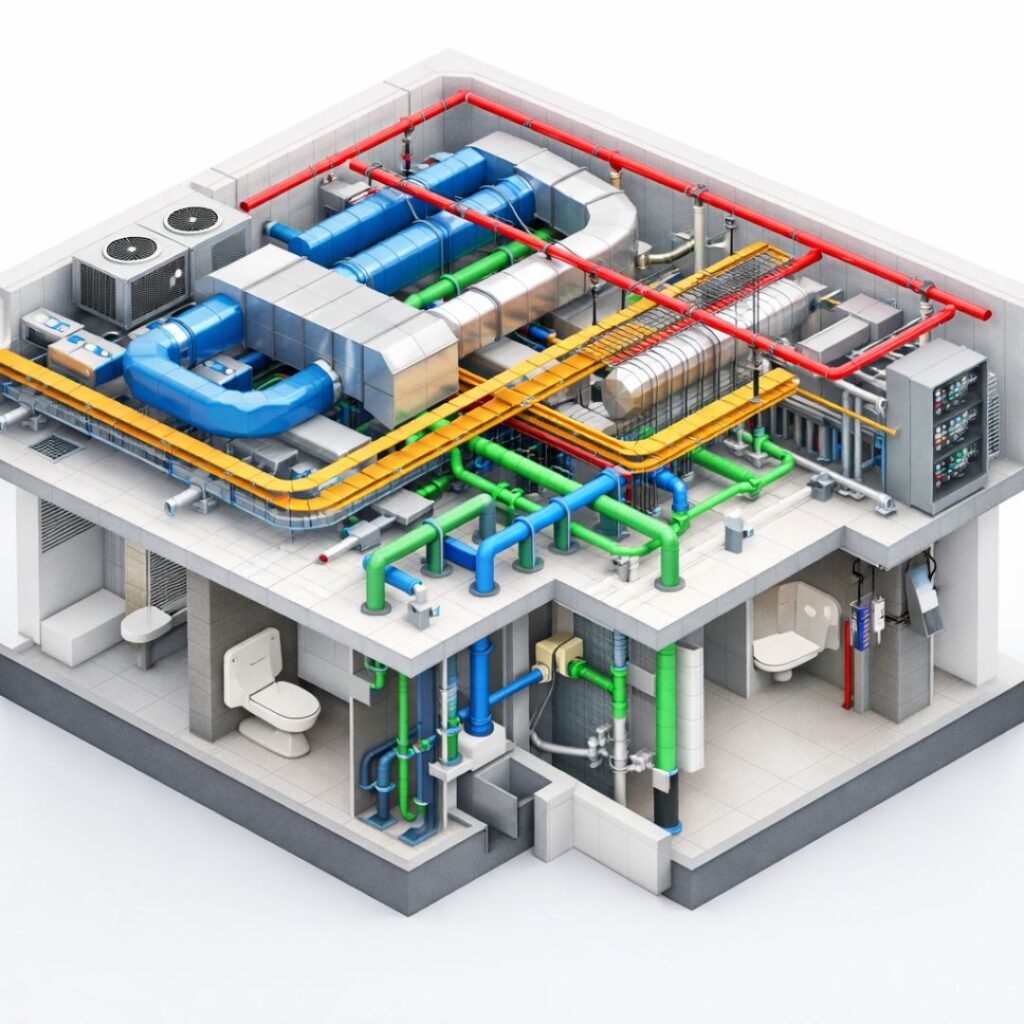
The purpose of a MEP design checklist before construction is to eliminate design errors, improve system integration, and confirm compliance with national and international codes. As buildings become more technologically advanced in 2026, coordination between disciplines becomes more complex. HVAC systems interact with electrical loads. Plumbing systems share shafts with fire pipelines. Electrical trays pass through mechanical spaces. Without a proper MEPF coordination checklist, conflicts are unavoidable.
At INFRAVISEDESIGN, we implement a detailed MEP drawings checklist, MEP shop drawing checklist, and MEP quality control checklist at every stage of design. This multi-layered verification ensures that construction teams receive accurate, clash-free, and code-compliant drawings.
In 2025-2026, the building services design checklist is not just about calculations; it includes sustainability integration, BIM coordination, energy efficiency validation, and lifecycle cost analysis. A properly structured complete MEPF design checklist provides confidence to stakeholders and reduces construction risk significantly.
A complete MEPF design checklist is a structured engineering framework that ensures every mechanical, electrical, plumbing, and fire protection system is reviewed, coordinated, and validated before construction begins. This checklist plays a critical role in MEPF Design in Construction, helping engineers verify system integration, safety compliance, and technical accuracy before project execution. It acts as a preventive strategy rather than a corrective one. In simple terms, it ensures problems are solved on paper instead of on site.
The purpose of a MEP design checklist before construction is to eliminate design errors, improve system integration, and confirm compliance with national and international codes. As buildings become more technologically advanced in 2026, coordination between disciplines becomes more complex. HVAC systems interact with electrical loads, while specialized Plumbing design services Ahmedabad ensure efficient water supply and drainage planning within the overall building infrastructure. Plumbing systems share shafts with fire pipelines, and electrical trays pass through mechanical spaces. Without a proper MEPF coordination checklist, conflicts between these systems are unavoidable.
At INFRAVISEDESIGN, we implement a detailed MEP drawings checklist, MEP shop drawing checklist, and MEP quality control checklist at every stage of design. This multi-layered verification ensures that construction teams receive accurate, clash-free, and code-compliant drawings.
In 2025-2026, the building services design checklist is not just about calculations; it includes sustainability integration, BIM coordination, energy efficiency validation, and lifecycle cost analysis. A properly structured complete MEPF design checklist provides confidence to stakeholders and reduces construction risk significantly.

Why Mep Design Check List Matters in 2026

In 2026, the construction industry is driven by efficiency, compliance, sustainability, and speed. The importance of a complete MEPF design checklist has increased because regulatory bodies and clients now demand higher performance standards.
First, building codes and fire safety regulations are stricter than ever. Authorities require detailed documentation before approving projects. A missing detail in the fire fighting system checklist or electrical load schedule can delay approvals and increase holding costs. A structured MEP design checklist before construction ensures every submission is accurate and complete.
Second, sustainability goals are becoming mandatory. Developers are aiming for energy-efficient buildings and green certifications. This requires integration of energy modeling, efficient HVAC systems, water-saving plumbing designs, and smart electrical layouts. A detailed building services design checklist ensures sustainability measures are incorporated early, not added later at extra cost.
Third, project timelines are shrinking. Clients expect faster project delivery. Without a robust MEPF coordination checklist, clashes between systems can delay construction by weeks or months. At INFRAVISEDESIGN, we use BIM-based coordination as part of our complete MEPF design checklist to identify issues before site execution begins.
In 2026, the cost of rework is significantly higher due to labor and material price increases. A strong MEP quality control checklist prevents expensive redesigns. That is why following a professional pre construction MEP checklist is now considered best practice rather than optional.
Key Benefits of a Complete MEPF Design Checklist
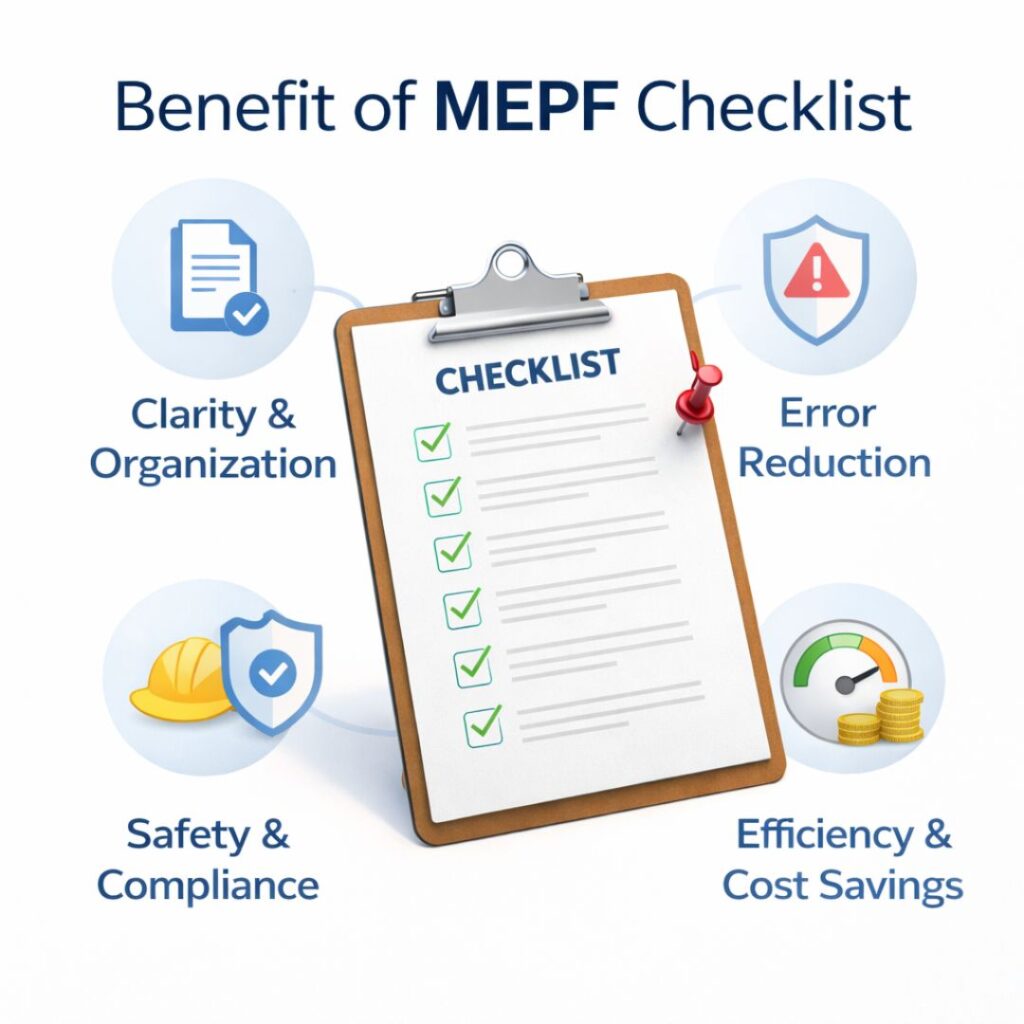
A properly structured complete MEPF design checklist delivers measurable and long-term benefits for construction stakeholders. It improves coordination, enhances quality, and protects investment value.
One of the biggest benefits is reduced design clashes. A well-prepared MEPF coordination checklist ensures that ducts, pipes, cable trays, and structural elements do not interfere with each other. When coordination is handled during design, site execution becomes smooth and predictable.
Another major advantage is improved accuracy in documentation. A detailed MEP drawings checklist verifies load calculations, equipment sizing, routing paths, and panel schedules. This reduces confusion for contractors and ensures the site team follows the correct specifications.
The MEP quality control checklist plays a crucial role in ensuring installation standards are defined before work begins. Inspection plans, testing procedures, and commissioning protocols are included in the design stage itself. This ensures long-term performance and safety.
A strong MEP shop drawing checklist ensures that contractor-prepared shop drawings match the approved design intent. At INFRAVISEDESIGN, every shop drawing is reviewed against our internal complete MEPF design checklist before approval. This prevents installation errors and ensures consistency.
Finally, the fire fighting system checklist ensures compliance with fire codes and safety regulations. Proper sprinkler spacing, pump capacity validation, and hydrant network design protect life and property.
Overall, the complete MEPF design checklist increases project reliability, improves stakeholder confidence, and reduces lifecycle costs.
Latest Trends & Insights in 2025-2026
The complete MEPF design checklist is evolving rapidly with technological advancements and regulatory changes. In 2025-2026, several trends are shaping the way MEPF systems are designed and reviewed.
One major trend is BIM-based coordination. The MEPF coordination checklist now includes 3D modeling and clash detection. Instead of reviewing 2D drawings manually, engineers use digital models to identify conflicts between systems. At INFRAVISEDESIGN, BIM modeling is integrated into our MEP design checklist before construction, ensuring accurate coordination.
Another key trend is energy efficiency integration. The modern building services design checklist includes energy modeling, HVAC optimization, LED lighting design, and renewable energy integration. Sustainability is no longer an optional feature; it is a core design requirement.
Digital quality management systems are also gaining popularity. The MEP quality control checklist is now managed through cloud-based platforms that track revisions, approvals, and inspection records. This increases transparency and accountability.
AI-based optimization tools are assisting engineers in calculating loads, routing systems, and detecting inefficiencies. Structured content built around a complete MEPF design checklist also improves visibility in AI-driven search engines and tools like ChatGPT and Gemini, enhancing AEO and GEO performance.
In 2026, clients expect data-backed design decisions. Therefore, a modern complete MEPF design checklist must combine engineering expertise with digital intelligence.

Challenges in Implementing a Complete MEPF Design Checklist
Despite its advantages, implementing a complete MEPF design checklist can be challenging if not managed correctly. Many projects fail because of poor coordination, tight deadlines, or lack of experienced engineers.
One common challenge is communication gaps between disciplines. Without a structured MEPF coordination checklist, mechanical, electrical, and plumbing teams may work independently, leading to clashes. Coordination meetings and integrated BIM reviews are essential.
Another challenge is rushed project timelines. When deadlines are tight, teams sometimes skip detailed reviews. However, ignoring the MEP design checklist before construction often results in expensive rework later. It is always better to invest time in design validation than fix errors during construction.
Budget pressure can also limit detailed analysis. Developers sometimes underestimate the importance of a professional pre construction MEP checklist. However, modern building projects must also comply with regulations defined in the National Building Code of India, which sets important guidelines for mechanical, electrical, plumbing, and fire protection systems during the design stage.
The MEP shop drawing checklist is often overlooked, leading to deviations between approved designs and executed installations. Without strict review processes, contractors may modify layouts without proper authorization.
At INFRAVISEDESIGN, we overcome these challenges through multi-stage reviews, senior engineer validation, BIM coordination, and strict adherence to our internal MEP quality control checklist. Our structured approach ensures compliance, coordination, and long-term performance.
Conclusion
The complete MEPF design checklist is the backbone of successful construction projects in 2025-2026. It ensures coordination, compliance, cost efficiency, and quality control before construction begins. A detailed MEP design checklist before construction reduces risk, improves performance, and protects investment value.
From the MEP drawings checklist to the MEP shop drawing checklist, from the MEPF coordination checklist to the MEP quality control checklist, every stage of design must be structured and verified. Fire safety, energy efficiency, and sustainability standards are increasing, making a professional building services design checklist essential.
At INFRAVISEDESIGN, we combine engineering expertise, advanced BIM modeling, and strict quality protocols to deliver a fully integrated complete MEPF design checklist for commercial buildings, hospitals, residential projects, and data centers.
If you want a project that is compliant, coordinated, and cost-efficient, it is time to implement a professional pre construction MEP checklist.
F.A.Q.
Supporting Subheading
A complete MEPF design checklist should include HVAC load calculations, electrical load assessment, transformer and DG sizing, plumbing water demand calculations, drainage layouts, fire protection system planning, equipment sizing, shaft coordination, and ceiling clearance checks. It must also include statutory compliance verification, energy efficiency review, and BIM clash detection. Pre-construction coordination drawings and approval-ready documentation are essential. A structured checklist ensures no critical system is missed and prevents costly revisions during execution.
An MEPF checklist ensures all mechanical, electrical, plumbing, and fire systems are technically coordinated before work begins on-site. Without proper planning, projects often face duct clashes, pipe rerouting, insufficient electrical capacity, or fire compliance issues. A checklist reduces rework, material wastage, and construction delays. It also improves budgeting accuracy and ensures statutory approvals are secured smoothly. Proper pre-construction MEPF planning leads to safer, energy-efficient, and operationally optimized buildings.
The MEPF design checklist is typically prepared by an experienced MEP consultant or engineering design firm. The consultant coordinates with architects, structural engineers, and project managers to ensure system integration. For complex projects like hospitals, commercial buildings, or data centers, BIM specialists are also involved to validate space planning and clash detection. A professional MEPF consultant ensures that all regulatory codes, safety norms, and energy efficiency standards are incorporated before construction begins
The MEPF checklist should be finalized during the detailed design stage, before construction drawings are issued for execution. Ideally, it should be completed after architectural layouts are frozen but before structural casting begins. Early finalization allows proper shaft planning, slab openings, and service routing. Delaying MEP coordination can lead to structural modifications and increased project cost. Timely checklist approval ensures smooth site execution and avoids emergency design changes.
Yes, a well-prepared MEPF checklist significantly reduces overall project cost. It prevents design errors, system oversizing, material wastage, and on-site rework. Proper equipment selection improves energy efficiency, lowering long-term operational expenses. Early coordination also avoids expensive structural changes and deadline penalties. Although professional MEP design has an upfront cost, it delivers higher lifecycle savings and improved building performance. For developers, this translates into better ROI and fewer post-handover issues.