Complete Guide to Fire Fighting System Design for Construction (2025-2026)
Fire safety is one of the most critical aspects of modern infrastructure. In today’s construction environment, Fire Fighting System Design for Construction is not just a regulatory requirement but a life-saving engineering discipline. Whether it is a residential tower, commercial complex, hospital, industrial plant, or data center, a properly engineered fire protection system design for buildings ensures occupant safety, asset protection, and uninterrupted operations.
In 2025–2026, construction projects are becoming taller, smarter, and more complex. This increases the need for accurate fire fighting system design calculation, well-planned fire hydrant system design for high rise building, advanced fire suppression system design requirements, and intelligent fire alarm and detection system design. Additionally, proper fire water tank capacity calculation for building projects and specialized fire safety system design for industrial buildings are essential to meet updated safety codes.
At INFRAVISEDESIGN, we bring deep MEP engineering expertise, compliance knowledge, and BIM coordination experience to deliver reliable Fire Fighting System Design for Construction solutions. As a provider of professional BIM Modeling Services in India, we help ensure better coordination between fire protection, plumbing, electrical, and HVAC systems throughout the project lifecycle. This complete guide explains everything in simple language while following E-E-A-T principles to help developers, architects, and project managers make informed decisions.
Introduction to Fire Fighting System Design for Construction (2025–2026)
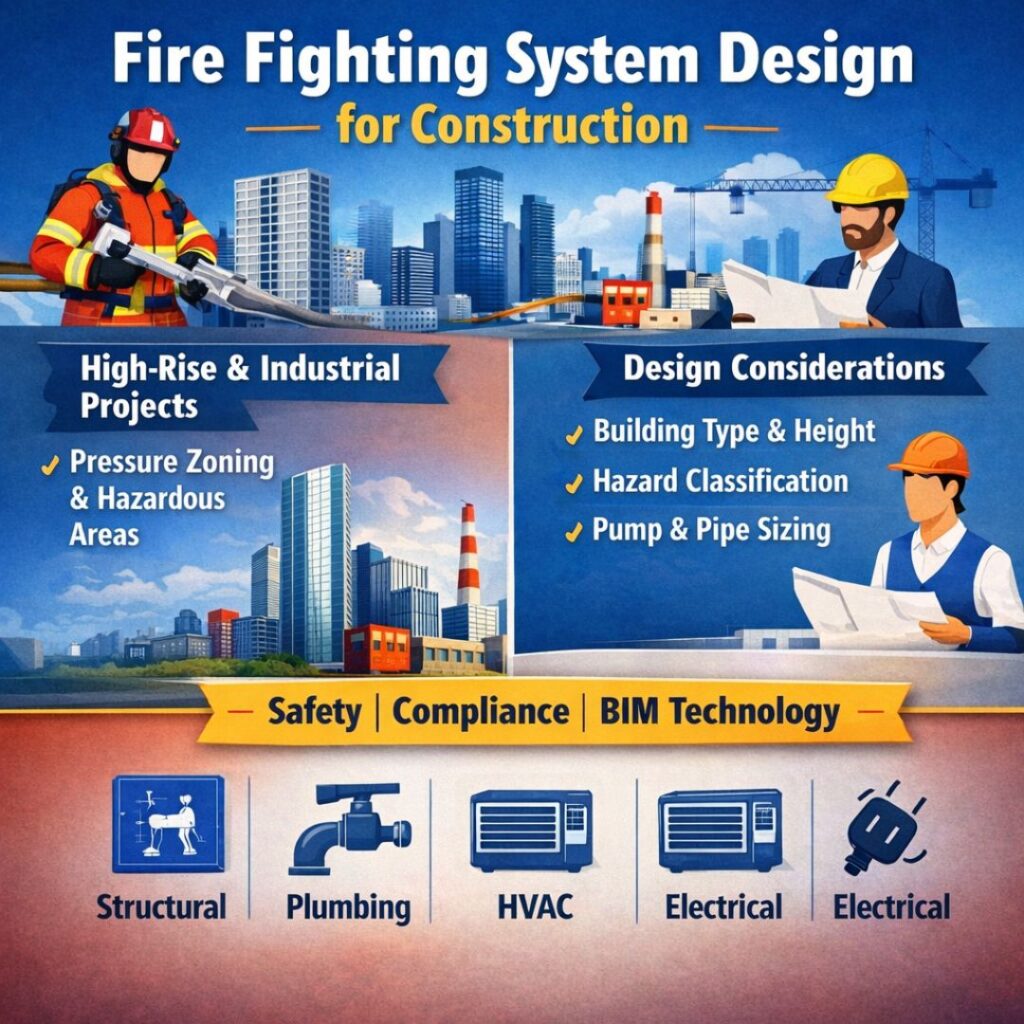
Fire Fighting System Design for Construction refers to the planning, engineering, calculation, layout preparation, and integration of fire protection systems within a building. It includes active systems like hydrants, sprinklers, suppression systems, pumps, and alarms, as well as passive measures such as fire-rated walls and safe evacuation routes.
A proper fire protection system design for buildings begins at the conceptual design stage. Engineers evaluate building occupancy type, height, hazard classification, and local fire regulations. Based on this assessment, detailed fire fighting system design calculation is performed to determine pump capacity, pipe sizing, flow rate, and pressure requirements. Without these calculations, systems may fail during emergencies.
In high-rise projects, fire hydrant system design for high-rise buildings becomes technically complex due to pressure zoning and vertical water distribution. Professional fire fighting system design Ahmedabad services help ensure that these systems are properly planned according to safety codes and building requirements. In industrial projects, fire safety system design for industrial buildings must account for hazardous materials, chemical storage, and heavy machinery risks.
At INFRAVISEDESIGN, our team integrates fire fighting system layout plan for building designs with structural, plumbing, HVAC, and electrical systems using BIM modeling. This avoids clashes and ensures compliance with NBC, NFPA, and local fire authority norms.
By 2026, Fire Fighting System Design for Construction is no longer a simple installation process—it is a multidisciplinary engineering solution that combines safety, compliance, and smart technology integration.

Why Fire Fighting System Design for Construction Matters in 2026
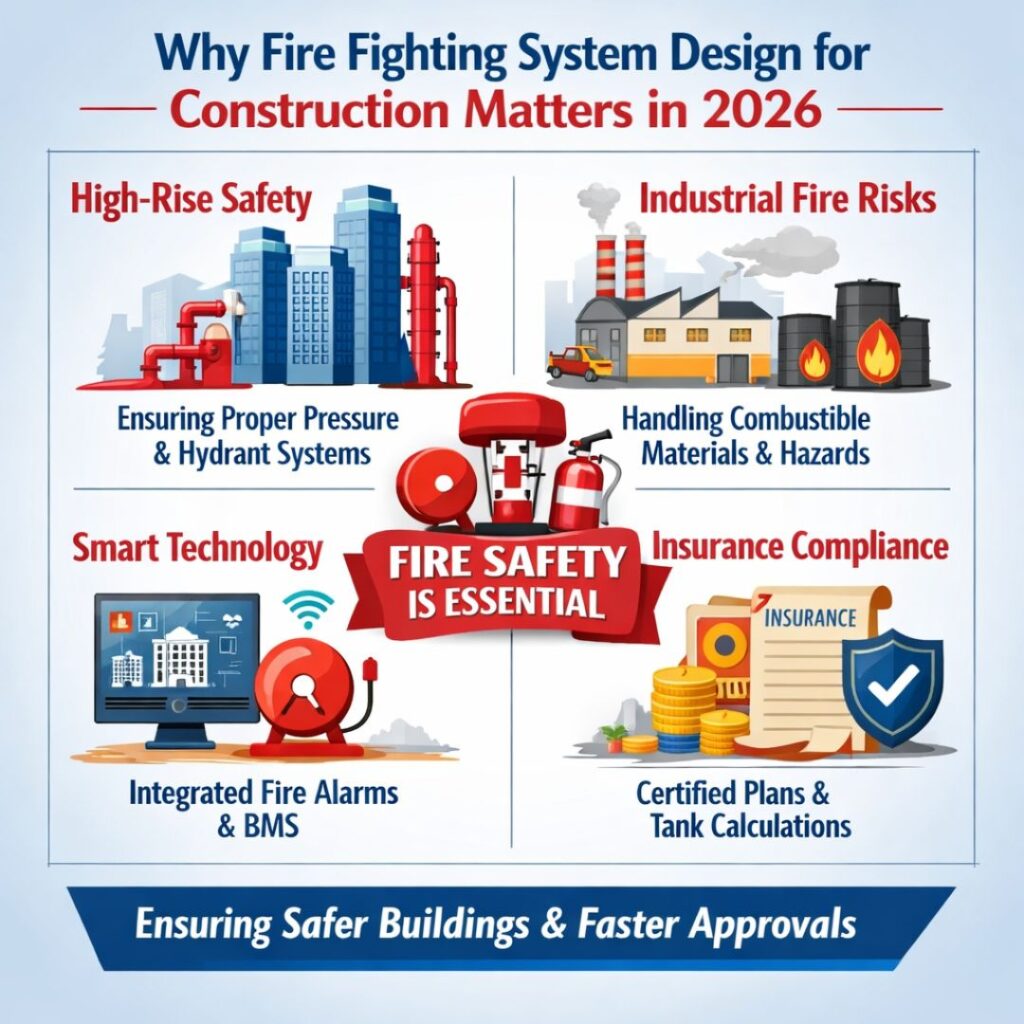
The importance of Fire Fighting System Design for Construction has increased significantly in 2026 due to rapid urbanization, stricter regulations, and higher building density. Governments now demand more detailed fire protection system design for buildings before granting approvals.
One major reason is the growth of high-rise structures. Fire hydrant system design for high-rise buildings requires specialized fire fighting system design calculation to ensure sufficient water pressure at upper floors. Incorrect pressure calculations can lead to system failure during emergencies. Proper coordination with plumbing design for construction is also essential, as both fire protection and plumbing systems depend on efficient water supply planning and distribution throughout the building.
Another reason is increased industrial development. Fire safety system design for industrial buildings must consider combustible materials, chemical hazards, and machinery heat loads. These risks require enhanced fire suppression system design requirements.
Modern buildings also use smart systems. Fire alarm and detection system design now integrates with Building Management Systems (BMS) for real-time monitoring and automated alerts. This reduces response time and improves evacuation efficiency.
Insurance companies are also stricter in 2026. Without proper fire water tank capacity calculation for building and certified fire fighting system layout plan for building, insurance claims can be rejected.
At INFRAVISEDESIGN, we ensure Fire Fighting System Design for Construction meets regulatory standards, insurance guidelines, and performance expectations. Our expertise ensures faster approvals, safer buildings, and long-term reliability.
Key Benefits of Professional Fire Protection System Design for Buildings
Investing in professional Fire Fighting System Design for Construction offers long-term benefits. Many developers see fire systems as compliance requirements, but they are actually risk management investments.
First, accurate fire fighting system design calculation prevents overdesign and underdesign. Oversized systems increase cost, while undersized systems compromise safety. Professional fire protection system design for buildings ensures optimal cost-performance balance.
Second, a well-planned fire fighting system layout plan for building reduces construction delays. Poor coordination often leads to clashes between fire pipelines and HVAC ducts. INFRAVISEDESIGN uses BIM coordination to eliminate such issues.
Third, efficient fire hydrant system design for high rise building ensures consistent pressure and reliability. In emergencies, seconds matter. A properly engineered system performs instantly.
Fourth, advanced fire alarm and detection system design provides early warning, reducing property damage and risk to human life.
Fifth, correct fire water tank capacity calculation for building ensures adequate water storage for the required duration as per code.
Sixth, specialized fire safety system design for industrial buildings reduces operational downtime and ensures compliance with safety audits.
Overall, professional Fire Fighting System Design for Construction enhances safety, credibility, insurance compliance, and asset value.
Core Components of Fire Fighting System Design for Construction
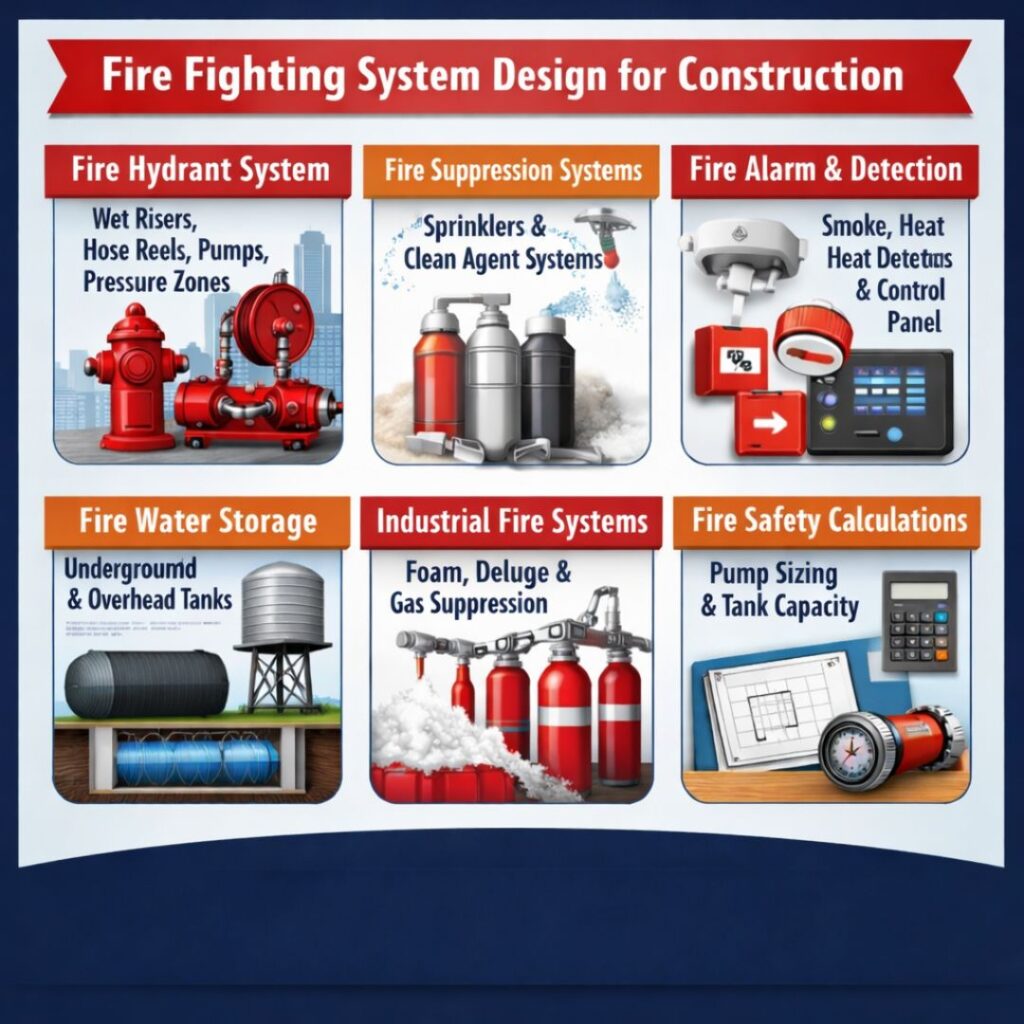
Fire Fighting System Design for Construction includes multiple interconnected systems. Each component must be engineered precisely.
Fire Hydrant System Design for High Rise Building
This includes wet risers, landing valves, hose reels, pumps, and terrace tanks. The fire fighting system design calculation determines pump head, discharge rate, and pipe sizing. High-rise buildings require pressure zoning to prevent pipe damage.
Fire Suppression System Design Requirements
Different occupancies require different suppression systems. Commercial buildings use sprinklers, while data centers use clean agent systems. Fire suppression system design requirements must align with hazard classification.
Fire Alarm and Detection System Design
This includes smoke detectors, heat detectors, manual call points, and control panels. Modern addressable systems improve accuracy and monitoring.
Fire Water Tank Capacity Calculation for Building
Storage capacity is calculated based on hazard class, building area, and fire duration requirement. Underground and overhead tanks must be dedicated for fire use.
Fire Safety System Design for Industrial Buildings
Industrial systems may include foam systems, deluge systems, and gas suppression systems. These require specialized fire fighting system design calculation and compliance checks.
INFRAVISEDESIGN ensures all these systems integrate seamlessly within the fire fighting system layout plan for building projects.
Latest Trends & Insights in Fire Fighting System Design for Construction (2025–2026)
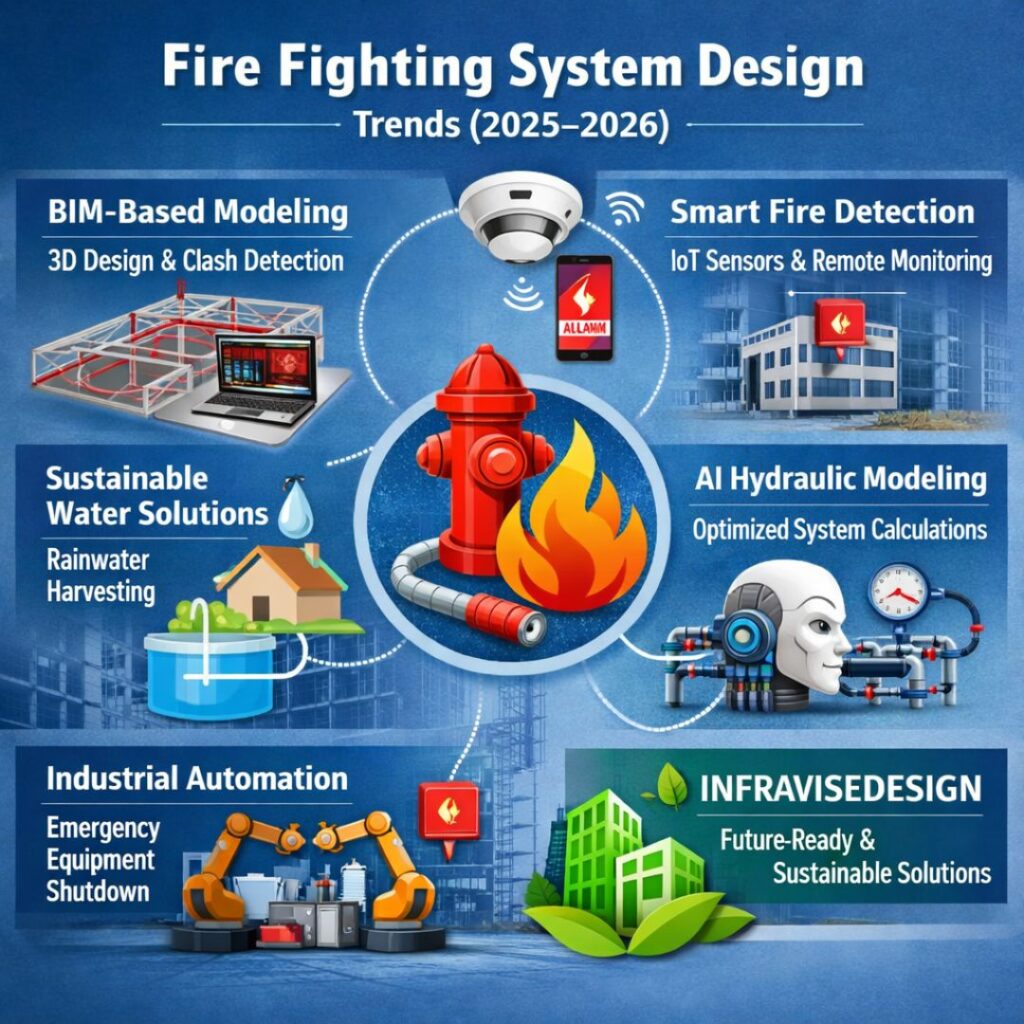
Fire Fighting System Design for Construction is evolving with technology and sustainability trends.
One major trend is BIM-based modeling. Fire protection system design for buildings is now developed in 3D environments to detect clashes before installation.
Smart fire alarm and detection system design uses IoT-enabled sensors for real-time alerts and remote monitoring.
Sustainability is also shaping fire water tank capacity calculation for building projects. Rainwater harvesting integration is becoming common.
AI-based hydraulic modeling improves fire fighting system design calculation accuracy, especially for fire hydrant system design for high rise building projects.
Industrial automation systems are integrated with fire safety system design for industrial buildings to shut down equipment automatically during emergencies.
At INFRAVISEDESIGN, we implement advanced design methodologies to keep Fire Fighting System Design for Construction future-ready and compliant with green building certifications.
Challenges in Fire Fighting System Design for Construction
Despite advancements, Fire Fighting System Design for Construction faces challenges.
Coordination complexity is a major issue. Fire fighting system layout plan for building must align with structural beams and MEP systems.
Frequent updates in fire suppression system design requirements demand continuous learning.
High-rise projects require complex fire fighting system design calculation for pressure zoning.
Industrial projects require specialized fire safety system design for industrial buildings due to hazardous environments.
Budget constraints sometimes affect fire water tank capacity calculation for building projects.
INFRAVISEDESIGN addresses these challenges using compliance-driven engineering and BIM coordination.
Conclusion: Secure Your Project with Expert Fire Fighting System Design for Construction
In 2026, Fire Fighting System Design for Construction is not just about installing hydrants and sprinklers. It is about engineering life safety systems that protect people, assets, and investments.
From accurate fire fighting system design calculation to efficient fire hydrant system design for high rise building, from advanced fire alarm and detection system design to reliable fire safety system design for industrial buildings, every element must be precisely engineered.
At INFRAVISEDESIGN, we specialize in comprehensive fire protection system design for buildings. Our expertise in fire fighting system layout plan for building projects, fire suppression system design requirements, and fire water tank capacity calculation for building ensures compliance, efficiency, and safety.
If you are planning a commercial building, residential tower, hospital, or industrial facility, now is the time to invest in professional Fire Fighting System Design for Construction.
Contact INFRAVISEDESIGN today to design safer, smarter, and fully compliant buildings for 2026 and beyond.
In 2026, Fire Fighting System Design for Construction is not just about installing hydrants and sprinklers. It is about engineering life safety systems that protect people, assets, and investments.
From accurate fire fighting system design calculation to efficient fire hydrant system design for high rise building, from advanced fire alarm and detection system design to reliable fire safety system design for industrial buildings, every element must be precisely engineered.
At INFRAVISEDESIGN, we specialize in comprehensive fire protection system design for buildings. Our expertise in fire fighting system layout plan for building projects, fire suppression system design requirements, and fire water tank capacity calculation for building ensures compliance, efficiency, and safety.
If you are planning a commercial building, residential tower, hospital, or industrial facility, now is the time to invest in professional Fire Fighting System Design for Construction.
Contact INFRAVISEDESIGN today to design safer, smarter, and fully compliant buildings for 2026 and beyond.
F.A.Q.
Fire fighting system design for construction refers to the planning, calculation, and integration of active fire protection systems within a building. It includes fire hydrant systems, sprinkler systems, fire suppression systems, fire alarm and detection systems, and fire water storage tanks. The design process involves hazard classification, hydraulic calculations, pump sizing, and pipe routing to ensure adequate water pressure and coverage. Proper fire protection system design ensures compliance with safety codes and minimizes fire risks. In 2025–2026 construction projects, advanced BIM coordination and smart monitoring technologies are increasingly used to enhance safety and efficiency.
A fire fighting system in buildings typically consists of fire hydrants, wet risers, hose reels, sprinkler systems, fire suppression systems, fire alarm panels, smoke detectors, and fire water storage tanks. Pumps such as jockey pumps, main pumps, and diesel backup pumps ensure consistent water pressure. The system also includes control valves, pressure gauges, and piping networks. In high-rise and industrial buildings, pressure zoning and specialized suppression systems like foam or clean agent systems are implemented. A well-designed fire safety system ensures quick response, effective fire control, and compliance with building regulations.
Fire fighting system design calculations involve determining water demand, pipe sizing, and pump capacity based on hazard classification and building type. Engineers calculate required flow rates for hydrants and sprinklers using hydraulic modeling methods. Pump head calculations ensure sufficient pressure at the most remote point in the system. Fire water tank capacity calculation is also performed to maintain adequate storage for a specified duration. These calculations are critical in high-rise and industrial projects where pressure loss can impact system performance. Accurate fire fighting system design calculation ensures safety, compliance, and reliable emergency response.
Fire hydrant system design is especially critical in high-rise buildings because water must reach upper floors with sufficient pressure. Without proper pressure zoning and pump sizing, hydrants may fail during emergencies. Engineers design vertical risers, landing valves, and booster pumps to maintain optimal pressure across different floors. Hydraulic calculations help determine pipe diameter and friction losses. In tall structures, incorrect design can lead to delayed response and increased safety risks. Therefore, fire hydrant system design for high-rise buildings ensures effective firefighting capability, code compliance, and enhanced occupant safety.
Fire fighting system design must comply with national and international fire safety standards to ensure proper protection. Commonly followed standards include NFPA guidelines, local building codes, and fire department regulations. These codes define requirements for pump capacity, pipe materials, sprinkler spacing, alarm systems, and fire water storage. Compliance ensures inspection approvals and reduces liability risks. In 2025–2026 construction projects, stricter regulations emphasize sustainability, smart detection systems, and advanced hydraulic modeling. Following approved fire protection system design standards ensures safe buildings and faster project approvals.