Complete Guide to Plumbing Design for Construction (2025-2026)
Plumbing design for construction is one of the most critical elements in modern building development. In 2025–2026, buildings are becoming smarter, taller, and more sustainable. Because of this, plumbing system design for commercial buildings and residential projects must be carefully planned from the early design stage. A properly engineered plumbing layout plan for building projects ensures water efficiency, hygiene, durability, and compliance with plumbing design standards and codes.
At INFRAVISEDESIGN, we have over 12 years of experience delivering plumbing design for construction across commercial complexes, residential towers, hospitals, and institutional buildings. As a trusted Building Information Modeling Company in India, we integrate advanced BIM technology with practical engineering expertise to improve coordination and project efficiency. This guide explains everything you need to know about water supply system design in building projects, plumbing design calculations, plumbing BIM modeling services, and plumbing shop drawings for construction.
Introduction to Complete Guide to Plumbing Design for Construction (2025–2026)
Plumbing design for construction refers to the complete engineering and planning of water supply, drainage, stormwater, and wastewater systems inside a building. It includes technical documentation, hydraulic calculations, compliance verification, and coordination with other MEP services. In 2026, plumbing system design for commercial buildings is no longer basic piping work — it is a performance-driven engineering discipline.
A modern plumbing layout plan for building projects includes underground tanks, overhead tanks, pump rooms, vertical risers, horizontal distribution lines, and fixture connections. As part of professional plumbing design services Ahmedabad, engineers focus on creating efficient and well-planned systems for different types of buildings. Residential plumbing design guidelines prioritize comfort, low maintenance, and cost efficiency, while commercial and high-rise building plumbing design focuses on pressure zoning, load balancing, and safety compliance.
One of the most important aspects of plumbing design for construction is plumbing design calculations. These calculations determine pipe sizes, pump capacity, flow rates, and fixture demand. Incorrect plumbing design calculations can cause pressure imbalance, pipe bursts, and water shortage complaints.
At INFRAVISEDESIGN, we use advanced plumbing BIM modeling services to create coordinated 3D models. This ensures accurate plumbing shop drawings for construction and avoids clashes with beams, ducts, and electrical systems. Our experience shows that early-stage coordination reduces site rework by nearly 25–30%.
In short, plumbing design for construction in 2025–2026 must be sustainable, code-compliant, digitally coordinated, and future-ready.

Why Plumbing Design for Construction Matters in 2026
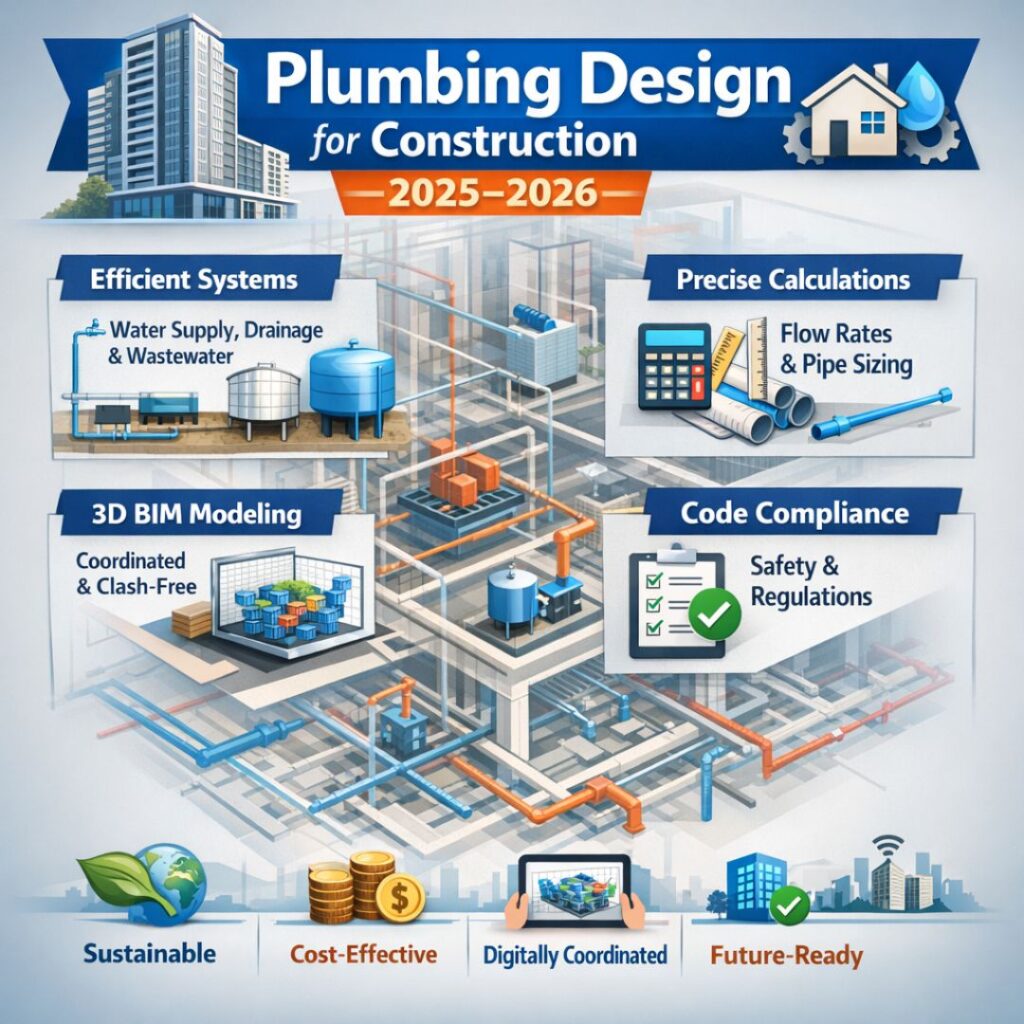
Plumbing design for construction matters more in 2026 because buildings must meet stricter environmental, safety, and performance regulations. Governments are enforcing updated plumbing design standards and codes to ensure water conservation and health safety. Without proper plumbing system design for commercial buildings, projects risk delays, penalties, and long-term operational failures.
Water scarcity is a growing global concern. Therefore, efficient water supply system design in building projects has become mandatory. Developers now require rainwater harvesting systems, greywater recycling, and low-flow fixtures as part of plumbing design for construction. These systems reduce water consumption and improve sustainability ratings like IGBC and LEED.
In high rise building plumbing design, pressure management is critical. If the plumbing layout plan for building projects does not include proper zoning and booster pump systems, upper floors may suffer from low pressure while lower floors experience pipe stress. This leads to maintenance issues and customer dissatisfaction.
From our experience at INFRAVISEDESIGN, we have observed that poor plumbing shop drawings for construction are one of the biggest causes of project delays. In many cases, improper coordination between structural and plumbing teams results in shaft redesign and slab cutting. Using plumbing BIM modeling services prevents these issues and improves coordination between different building systems. Proper integration with Fire Fighting System Design for Construction is also essential, as both plumbing and fire protection networks must work together within the same building infrastructure.
Plumbing design for construction also directly impacts property value. Buyers and tenants prefer buildings with efficient water supply system design in building infrastructure and reliable drainage systems. In 2026, plumbing quality is a competitive advantage.
Key Benefits of Professional Plumbing Design for Construction
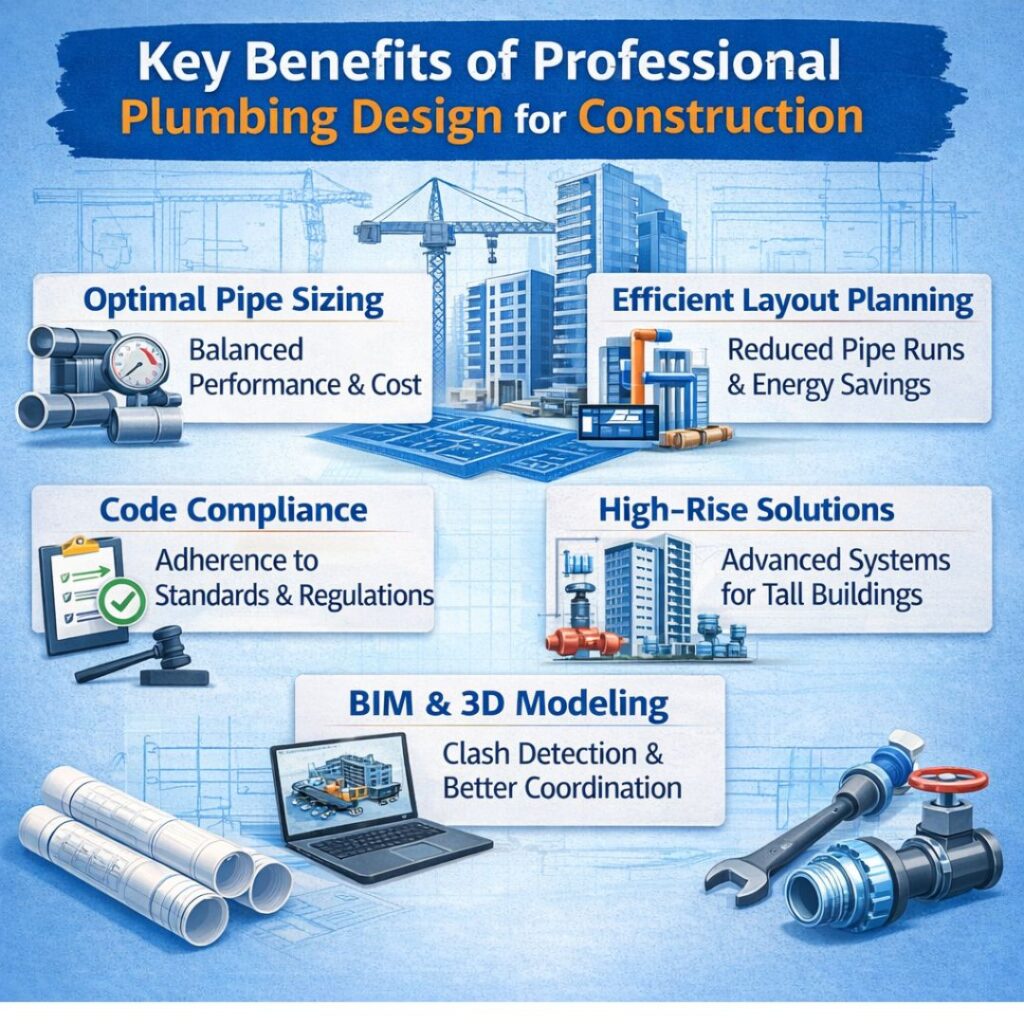
Investing in professional plumbing design for construction provides measurable benefits in terms of cost, safety, and long-term efficiency. A well-executed plumbing system design for commercial buildings improves performance while reducing operational expenses.
First, accurate plumbing design calculations ensure optimal pipe sizing and pump selection. Oversized pipes increase material costs, while undersized pipes reduce efficiency. Proper plumbing design calculations balance performance and budget.
Second, an optimized plumbing layout plan for building projects minimizes pipe routing complexity. Shorter pipe runs reduce friction loss and energy consumption. This improves the efficiency of water supply system design in building systems.
Third, compliance with plumbing design standards and codes prevents legal complications. Professional firms like INFRAVISEDESIGN ensure every plumbing shop drawing for construction aligns with NBC and municipal regulations.
Fourth, high rise building plumbing design requires advanced hydraulic understanding. Proper zoning, pressure reducing valves, and transfer pump systems are essential for tall buildings. Mistakes in these areas can cause system failure.
Finally, plumbing BIM modeling services improve accuracy and coordination. By creating 3D coordinated models, conflicts are detected before construction begins. At INFRAVISEDESIGN, BIM-based plumbing design for construction has helped clients save significant time and cost.
Overall, professional plumbing design for construction ensures durability, sustainability, and operational excellence.
Latest Trends & Insights in Plumbing Design for Construction (2025–2026)
Challenges in Plumbing Design for Construction
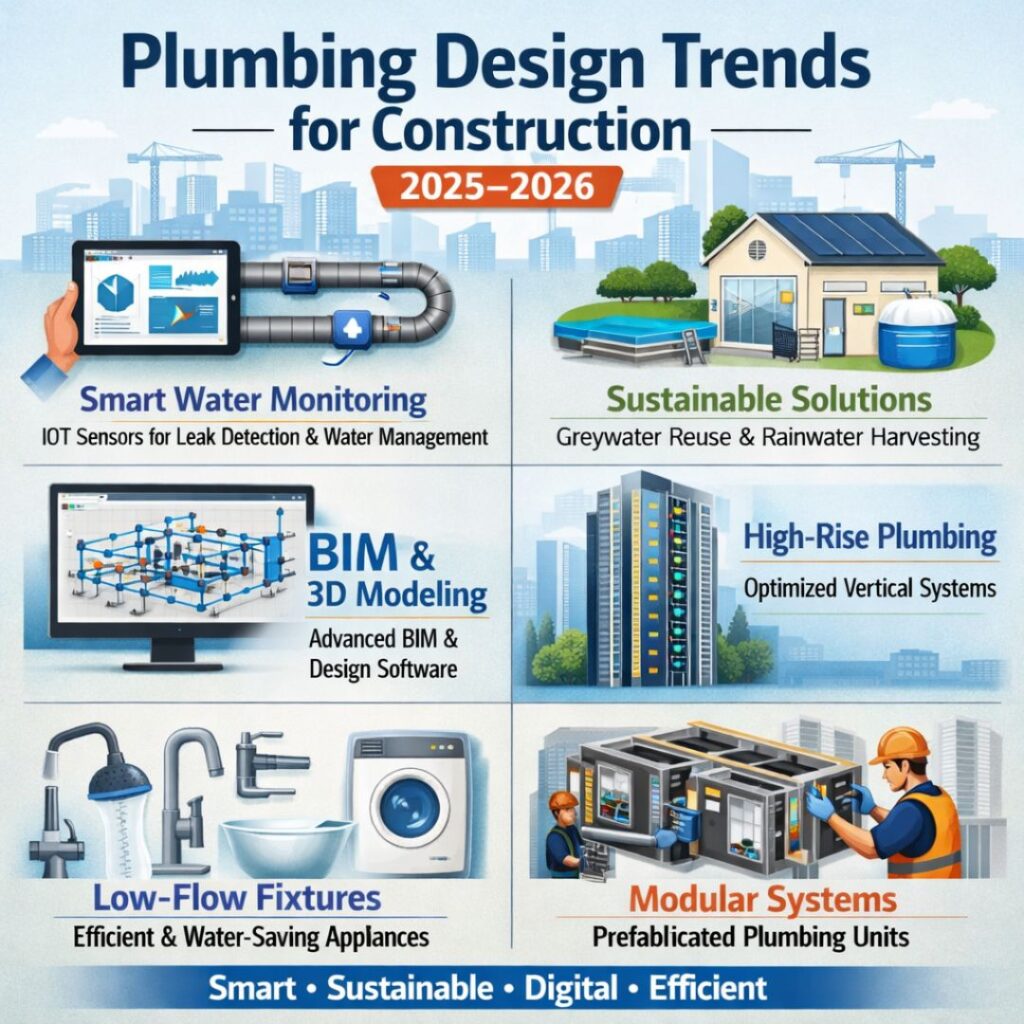
The future of plumbing design for construction is shaped by technology and sustainability. In 2025–2026, plumbing system design for commercial buildings is becoming smarter and more data-driven.
One major trend is smart water monitoring. IoT sensors are integrated into water supply system design in building projects to detect leaks and monitor consumption in real time. This reduces water waste and maintenance costs.
Another key trend is sustainable plumbing design standards and codes. New regulations encourage greywater reuse, rainwater harvesting, and energy-efficient pumping systems. Residential plumbing design guidelines now recommend low-flow fixtures and water-saving appliances.
High rise building plumbing design is also evolving. Engineers are using advanced plumbing design calculations software to simulate pressure conditions and optimize vertical distribution networks.
The rise of plumbing BIM modeling services is transforming construction workflows. Digital models improve plumbing shop drawings for construction accuracy and reduce coordination errors. At INFRAVISEDESIGN, we integrate BIM with cost estimation and scheduling tools for better project control.
Additionally, modular and prefabricated plumbing systems are gaining popularity. Pre-assembled piping modules reduce installation time and improve quality control.
In summary, modern plumbing design for construction is smart, sustainable, digital, and performance-focused.
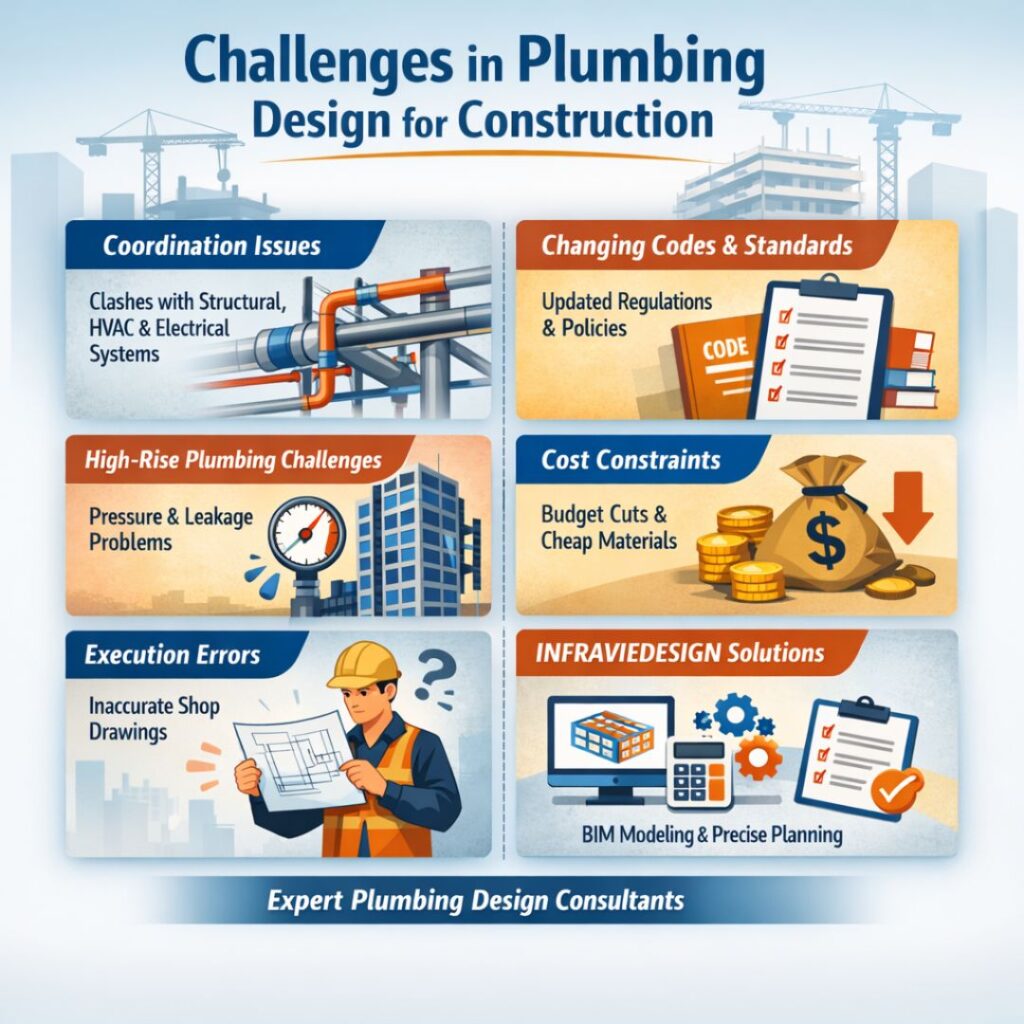
Despite advancements, plumbing design for construction faces several practical challenges in 2026. Understanding these challenges helps developers choose experienced consultants like INFRAVISEDESIGN.
One major challenge is coordination complexity. Plumbing layout plan for building projects must align with structural beams, HVAC ducts, and electrical trays. Without plumbing BIM modeling services, clashes are common.
Another challenge is changing plumbing design standards and codes. Engineers must stay updated with municipal amendments and environmental policies.
High rise building plumbing design presents vertical pressure challenges. Incorrect plumbing design calculations can cause water hammer, pressure imbalance, and leakage.
Cost pressure is another issue. Developers sometimes reduce budgets for plumbing system design for commercial buildings, which leads to poor-quality materials and long-term maintenance problems.
Execution errors due to inaccurate plumbing shop drawings for construction also create delays. Field-level modifications increase project cost.
At INFRAVISEDESIGN, we solve these challenges through early-stage planning, precise plumbing design calculations, and coordinated plumbing BIM modeling services. Our systematic approach ensures compliance, performance, and long-term reliability.
Conclusion
Plumbing design for construction in 2025–2026 is a technical, strategic, and sustainability-driven process. From residential plumbing design guidelines to complex plumbing system design for commercial buildings, every project demands accuracy and expertise.
Accurate plumbing layout plan for building projects, reliable water supply system design in building systems, and compliant plumbing design standards and codes ensure project success. With advanced plumbing BIM modeling services and detailed plumbing shop drawings for construction, developers can achieve efficiency and quality.
At INFRAVISEDESIGN, we combine 12+ years of industry experience with modern digital tools to deliver future-ready plumbing design for construction. Whether you need high rise building plumbing design or commercial plumbing system planning, our team ensures cost-effective and sustainable solutions.
F.A.Q.
Plumbing design for construction refers to the planning, calculation, and layout development of water supply, drainage, and wastewater systems within a building project. It includes pipe sizing, fixture unit calculation, water demand estimation, pressure analysis, and system routing. Proper plumbing design ensures reliable water distribution, efficient drainage flow, and compliance with safety regulations. In modern construction projects, plumbing systems are coordinated with structural, HVAC, and electrical services to avoid clashes. A well-designed plumbing system improves water efficiency, reduces maintenance issues, and supports sustainable building practices for long-term operational performance.
A plumbing system in building construction consists of three primary components: water supply system, drainage system, and vent system. The water supply system delivers clean water through pipes, pumps, and storage tanks. The drainage system removes wastewater safely using properly sloped piping and traps. The vent system maintains air pressure balance and prevents sewer gases from entering occupied spaces. Additional components include valves, fittings, fixtures, and water heating systems. In commercial and high-rise buildings, pressure boosting systems and advanced piping layouts are also integrated to ensure consistent performance and compliance with plumbing design standards.
Plumbing pipe sizing is calculated based on fixture units, flow rates, pipe length, friction loss, and pressure requirements. Engineers first determine total water demand using standard fixture unit calculations. Then, they analyze pipe material, allowable velocity, and pressure drop limits to select the appropriate diameter. For drainage systems, slope and gravity flow capacity are considered to prevent blockages. Incorrect pipe sizing can lead to low water pressure, leakage risks, or excessive installation costs. Accurate plumbing design calculations ensure balanced water distribution, energy efficiency, and reliable long-term system performance in construction projects.
Building Information Modeling (BIM) plays a crucial role in modern plumbing design for construction. BIM allows engineers to create 3D models of plumbing systems and coordinate them with other building services. This reduces clashes with structural beams, HVAC ducts, and electrical conduits before installation begins. BIM also improves accuracy in plumbing layout planning, pipe routing, and material estimation. By detecting conflicts early, construction delays and rework costs are minimized. In large commercial and high-rise projects, BIM modeling ensures precise execution, better collaboration among teams, and improved overall project efficiency.
Plumbing design in construction must comply with national and international codes to ensure safety and performance. Commonly followed standards include local building codes, plumbing codes, and environmental regulations. These standards regulate pipe materials, minimum slopes, water pressure limits, backflow prevention, and sanitation requirements. Compliance ensures public health safety and reduces legal risks. In commercial and industrial buildings, adherence to updated plumbing design standards also supports sustainability goals such as water conservation and efficient wastewater management. Following proper codes in 2025–2026 ensures inspection approvals and long-term system reliability.