Complete Guide to Electrical Design for Construction (2025-2026)
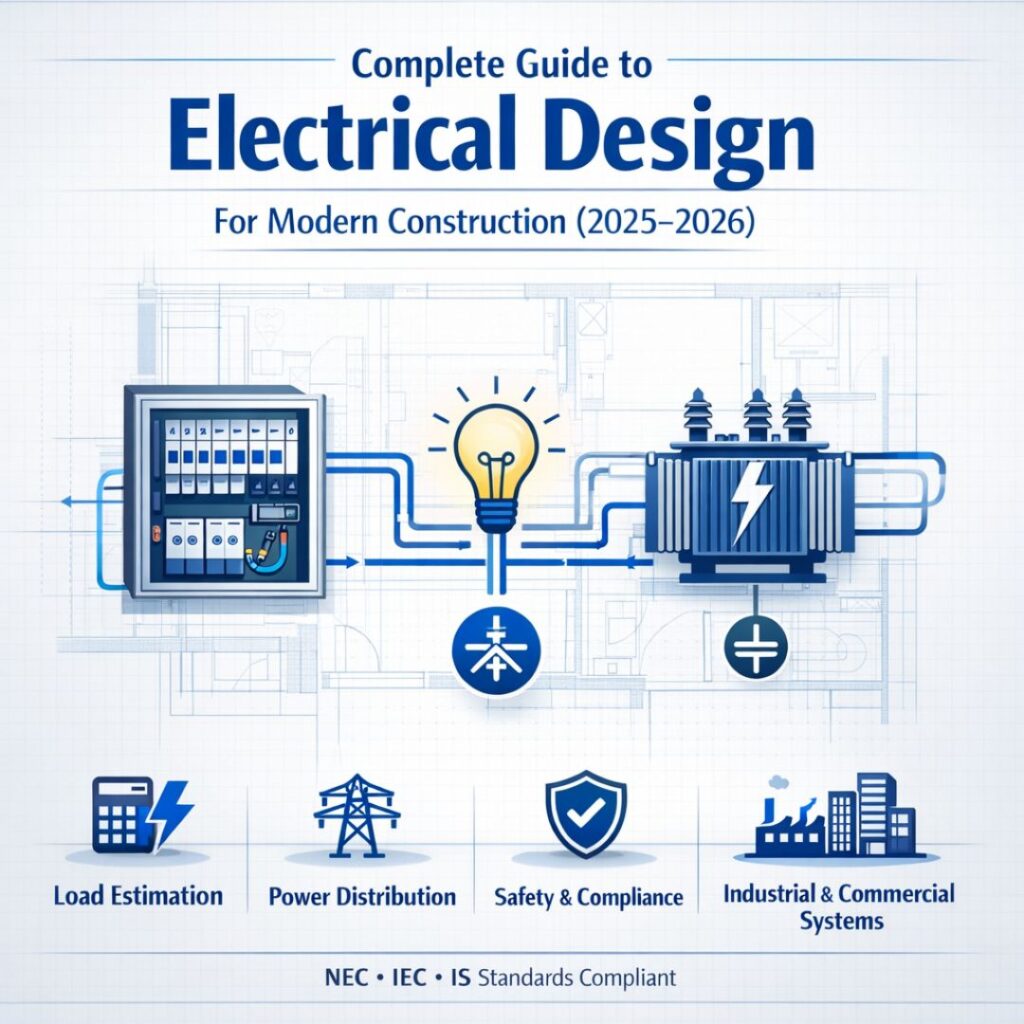
Electrical design for construction plays a critical role in modern building development. In 2025–2026, buildings are no longer just physical structures; they are integrated systems powered by advanced electrical infrastructure. Whether it is a residential apartment, commercial complex, hospital, data center, or industrial plant, electrical system design in building construction directly impacts safety, energy efficiency, compliance, and long-term performance.
Today, developers, architects, and contractors must follow strict building electrical design standards while ensuring scalability for future technologies such as EV charging, renewable energy systems, automation, and smart building integration. A well-planned electrical wiring layout plan for construction ensures proper cable routing, optimized panel locations, reduced power losses, and safe distribution systems. To enhance coordination and design accuracy, many projects now collaborate with a professional Building Information Modeling Company in India that utilizes BIM technology to visualize electrical systems, detect clashes early, and streamline construction planning.
At INFRAVISEDESIGN, we have over a decade of hands-on experience delivering electrical services design in construction projects across commercial, residential, and industrial sectors. Our structured approach combines engineering expertise, compliance knowledge, and cost optimization strategies to deliver high-performance electrical design for construction solutions.
This complete guide explains every major aspect of electrical design for construction in 2025–2026, including benefits, trends, challenges, and best practices.
Introduction to Complete Guide to Electrical Design for Construction (2025–2026)
Electrical design for construction refers to the detailed planning and engineering of electrical systems before a building is constructed. It includes load estimation, power distribution planning, lighting systems, earthing, cable sizing, electrical panel design for commercial building projects, backup systems, and safety compliance.
In modern projects, electrical system design in building construction begins at the concept stage. Engineers prepare a structured residential electrical design plan or commercial layout based on the project type. For example, a residential electrical design plan focuses on lighting circuits, power sockets, inverter provision, and safety breakers. On the other hand, commercial electrical design guidelines demand higher load capacity, transformer planning, DG backup integration, fire alarm systems, and structured cable management.
A proper electrical wiring layout plan for construction ensures that electrical routes are coordinated with HVAC ducts and plumbing lines. Without this planning, site conflicts increase and project costs rise significantly.
Industrial electrical system design requires even more precision. It includes motor control centers, heavy machinery load calculations, power factor correction systems, and high-voltage distribution planning.
At INFRAVISEDESIGN, we follow strict building electrical design standards such as NEC, IEC, IS codes, and local authority norms. Our electrical design calculations for engineers include voltage drop analysis, short-circuit study, transformer sizing, and panel capacity verification.
Simply put, electrical design for construction is the backbone of a safe and functional building.

Why Electrical Design for Construction Matters in 2026
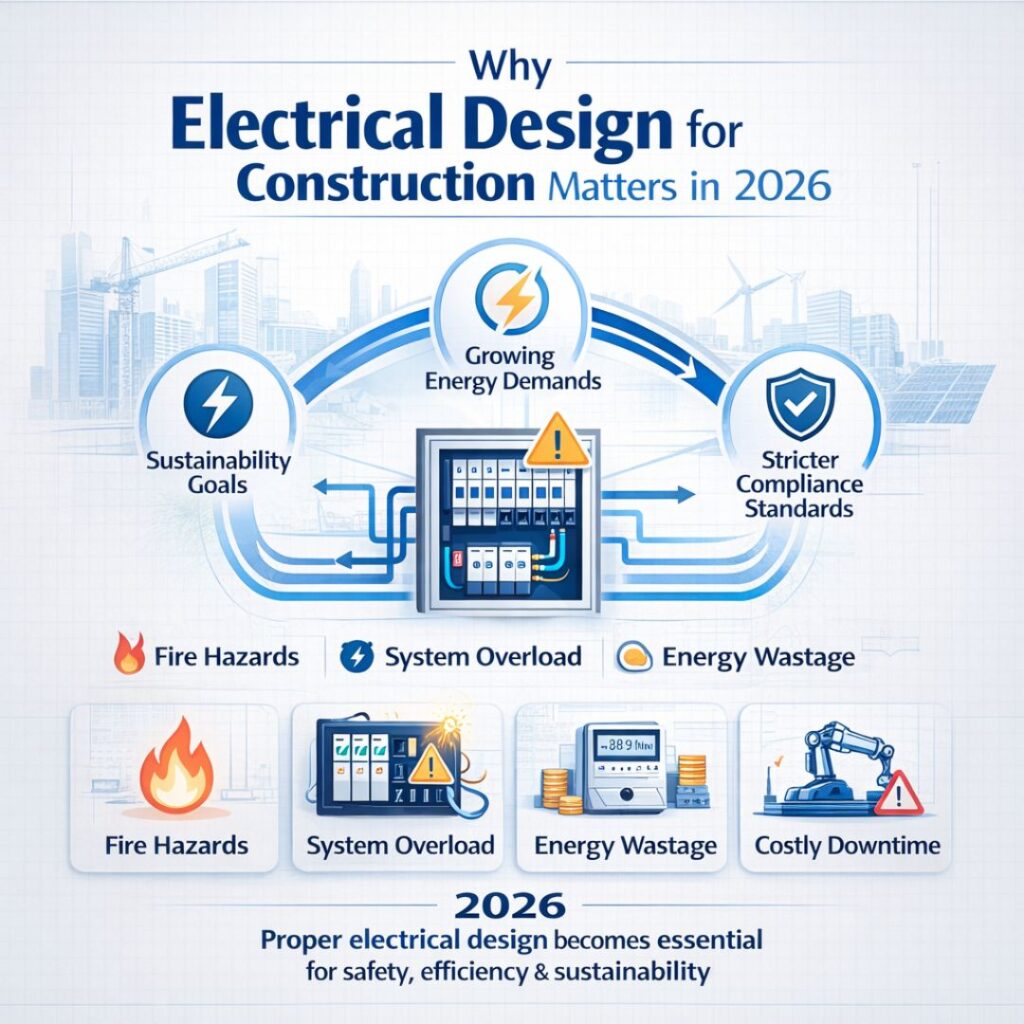
In 2026, the importance of electrical design for construction has increased significantly due to growing energy demands, sustainability goals, and stricter compliance requirements. Buildings now consume more electricity because of automation systems, smart lighting, high-speed elevators, data rooms, and electric vehicle charging stations.
If electrical system design in building construction is not done properly, it can lead to system overload, frequent tripping, energy wastage, and even fire hazards. Developers cannot afford such risks in modern commercial or residential projects.
Commercial electrical design guidelines now require advanced monitoring systems, energy-efficient lighting, and emergency backup integration. Electrical panel design for commercial building projects must support UPS systems, generators, solar panels, and EV infrastructure. Without correct electrical design calculations for engineers, panels may become undersized or overloaded.
In residential developments, a structured residential electrical design plan ensures safe circuit distribution, balanced loads, and future scalability. Homeowners increasingly demand smart switches, automation systems, and renewable energy integration.
Industrial electrical system design requires even more precision. It includes motor control centers, heavy machinery load calculations, power factor correction systems, and high-voltage distribution planning. For such complex projects, many developers rely on an experienced Electrical design consultant Ahmedabad to ensure accurate load analysis, safe power distribution, and compliance with industrial electrical standards.
At INFRAVISEDESIGN, we have observed that professionally executed electrical services design in construction projects reduces operational costs by up to 25% over time. Proper electrical design for construction is no longer optional—it is a strategic investment in long-term safety and efficiency.
Key Benefits of Professional Electrical Design for Construction
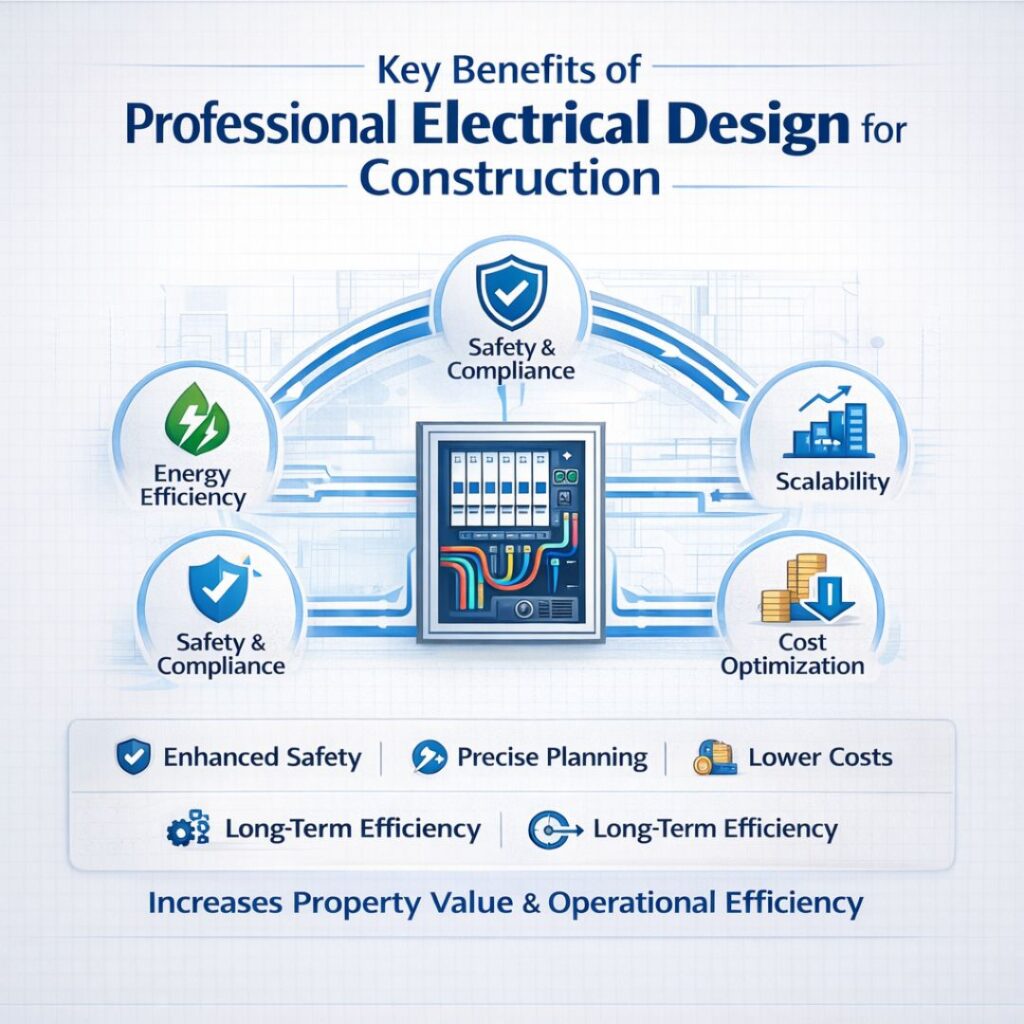
A professionally planned electrical design for construction offers multiple long-term advantages for developers and building owners.
First, it ensures safety. Following building electrical design standards minimizes the risk of electrical fires, short circuits, and system failures. Proper earthing and protection devices protect both equipment and occupants.
Second, accurate electrical design calculations for engineers ensure that cables, breakers, transformers, and panels are correctly sized. Oversized systems increase costs, while undersized systems create safety risks. Precision in electrical system design in building construction helps maintain balance between performance and budget, while coordinated HVAC design for construction ensures that mechanical systems work efficiently alongside electrical infrastructure.
Third, cost optimization is a major benefit. When electrical services design in construction projects is completed before execution, material wastage and rework are significantly reduced. Proper electrical wiring layout plan for construction avoids clashes and installation delays.
Fourth, scalability becomes easier. Electrical panel design for commercial building projects often includes spare capacity for future expansion. This reduces renovation costs later.
Fifth, energy efficiency improves. Modern commercial electrical design guidelines emphasize LED lighting, occupancy sensors, and intelligent control systems.
At INFRAVISEDESIGN, our experience in residential electrical design plan development and industrial electrical system design proves that structured planning results in better lifecycle performance. A well-executed electrical design for construction increases property value, compliance reliability, and long-term operational efficiency.
Latest Trends & Insights in Electrical Design (2025–2026)
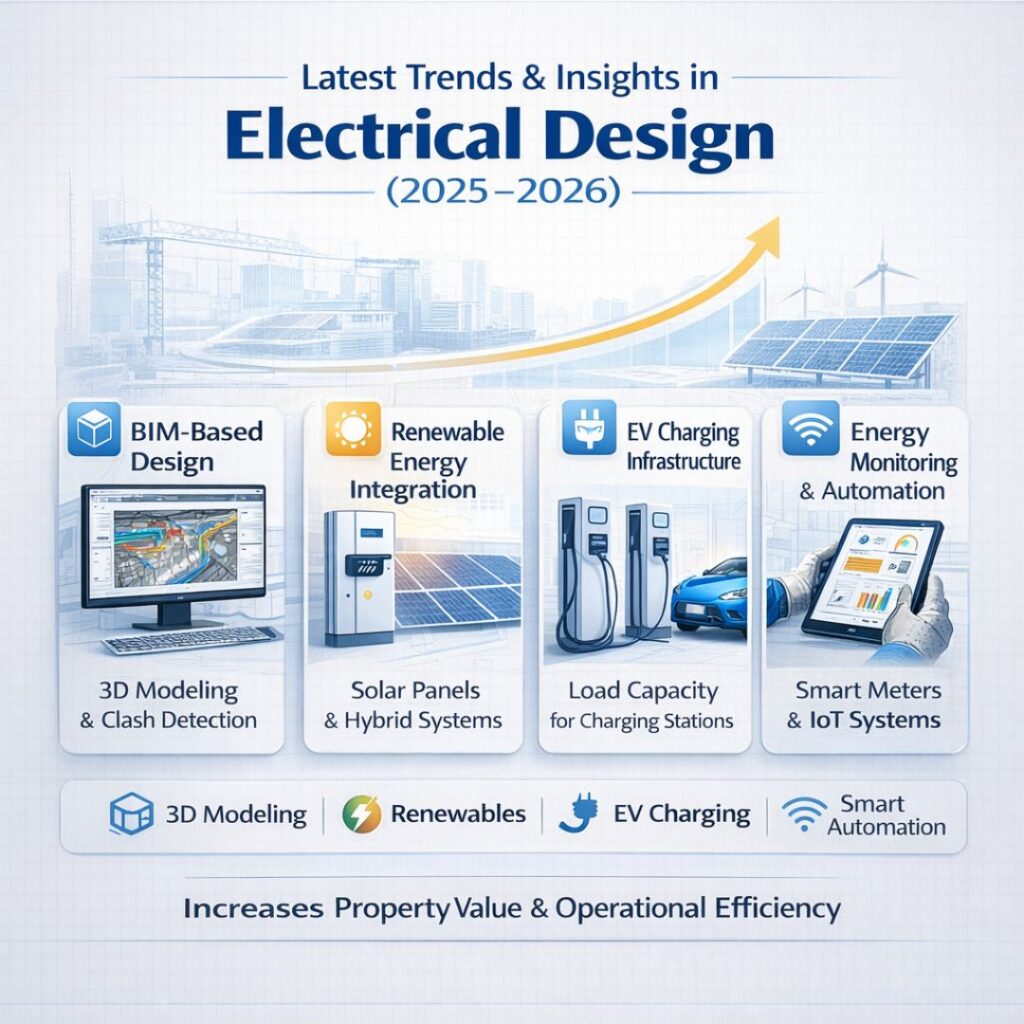
Electrical design for construction is evolving rapidly due to technological innovation and sustainability requirements. In 2025–2026, several key trends are shaping electrical system design in building construction.
One of the most important trends is BIM-based electrical services design in construction projects. 3D modeling helps engineers visualize electrical wiring layout plan for construction and detect clashes before installation.
Another major trend is renewable energy integration. Residential electrical design plan strategies now commonly include rooftop solar panels and hybrid inverter systems. Commercial electrical design guidelines also require solar-ready infrastructure.
EV charging infrastructure is becoming mandatory in commercial and residential buildings. Electrical panel design for commercial building projects must consider higher load capacity for charging stations.
Energy monitoring systems and IoT integration are also growing. Smart meters help track power consumption and reduce operational costs.
Industrial electrical system design is increasingly focused on automation and power quality improvement. Engineers are using advanced software for electrical design calculations for engineers to predict load growth and optimize distribution.
At INFRAVISEDESIGN, we integrate these innovations into every electrical design for construction project to ensure clients receive future-ready solutions.
Challenges in Electrical Design for Construction
Despite technological advancements, electrical design for construction still faces multiple challenges in 2026.
One major challenge is coordination. Electrical system design in building construction must align with structural, HVAC, and plumbing systems. Poor coordination leads to installation conflicts and delays.
Another challenge is compliance. Building electrical design standards are frequently updated. Engineers must stay informed about regulatory changes to avoid project rejection.
Budget constraints also create pressure. Developers sometimes attempt to reduce electrical services design in construction projects costs, which can compromise safety and performance.
Accurate electrical design calculations for engineers are complex, especially in industrial electrical system design where heavy machinery and continuous loads are involved.
Technology adaptation is another issue. BIM and smart monitoring tools require trained professionals.
At INFRAVISEDESIGN, we address these challenges through experienced engineering teams, quality audits, and strict adherence to commercial electrical design guidelines. Our structured process ensures that electrical wiring layout plan for construction is practical, compliant, and execution-ready.
Conclusion: Powering the Future with Smart Electrical Design
Electrical design for construction in 2025–2026 is more advanced and critical than ever before. From residential electrical design plan development to industrial electrical system design, every project requires precision, compliance, and future scalability.
Proper electrical system design in building construction ensures safety, energy efficiency, and cost optimization. Accurate electrical design calculations for engineers, well-planned electrical panel design for commercial building projects, and adherence to building electrical design standards guarantee long-term success.
At INFRAVISEDESIGN, we specialize in comprehensive electrical services design in construction projects across commercial, residential, and industrial sectors. Our commitment to quality, sustainability, and innovation makes us a trusted partner for developers and contractors.
F.A.Q.
Electrical design for construction refers to the planning, calculation, layout preparation, and system integration of electrical infrastructure in a building project. It includes load estimation, power distribution planning, wiring layout design, panel board configuration, earthing systems, and safety compliance checks. The goal is to ensure safe, reliable, and energy-efficient power supply throughout the building. Proper electrical system design prevents overloads, short circuits, and fire hazards while meeting regulatory standards. In modern construction projects, electrical design also integrates renewable energy systems, backup generators, and smart monitoring solutions to improve efficiency and long-term performance.
The electrical design process follows a structured approach to ensure safety and efficiency. First, engineers perform load calculations to determine total connected and demand load. Second, system sizing and transformer capacity are finalized. Third, power distribution layouts and single-line diagrams are prepared. Fourth, electrical panel design and cable sizing calculations are completed based on current ratings and voltage drop limits. Finally, grounding, protection systems, and compliance checks are performed as per applicable standards. In 2025–2026 construction projects, BIM coordination is also used to avoid clashes with HVAC, plumbing, and structural systems, ensuring smooth execution.
Electrical load calculation is one of the most critical steps in electrical design for construction because it determines the required power capacity of the building. Incorrect load estimation can result in system overload, voltage fluctuations, and increased fire risk. Proper calculations consider lighting loads, HVAC equipment, machinery, plug loads, and future expansion capacity. Accurate load planning ensures correct transformer sizing, cable selection, and panel board configuration. It also helps optimize project cost by preventing overdesign. In commercial and industrial buildings, detailed electrical design calculations improve system reliability and long-term operational efficiency.
Electrical design in building construction must comply with national and international standards to ensure safety and reliability. Commonly followed standards include NEC (National Electrical Code), IEC standards, and IS codes in India. These standards regulate cable sizing, earthing requirements, protection devices, short-circuit ratings, and fire safety measures. Compliance ensures that electrical installations meet legal and safety requirements. In commercial and industrial projects, strict adherence to electrical design standards reduces liability risks and inspection delays. Following updated guidelines in 2025–2026 also supports energy efficiency and sustainable building practices.
Professional electrical design improves construction efficiency by ensuring accurate planning, optimized material usage, and reduced rework. Proper system layout minimizes installation conflicts and supports smooth coordination with other MEP services. Efficient panel design and cable routing reduce energy losses and improve overall performance. Additionally, integrating smart monitoring systems and renewable energy solutions enhances sustainability and operational control. In commercial buildings, a well-planned electrical system reduces downtime, maintenance costs, and safety risks. Investing in expert electrical design for construction ultimately increases property value and ensures long-term operational stability