What is MEPF Design in Construction? Complete guide ( 2025-2026 )
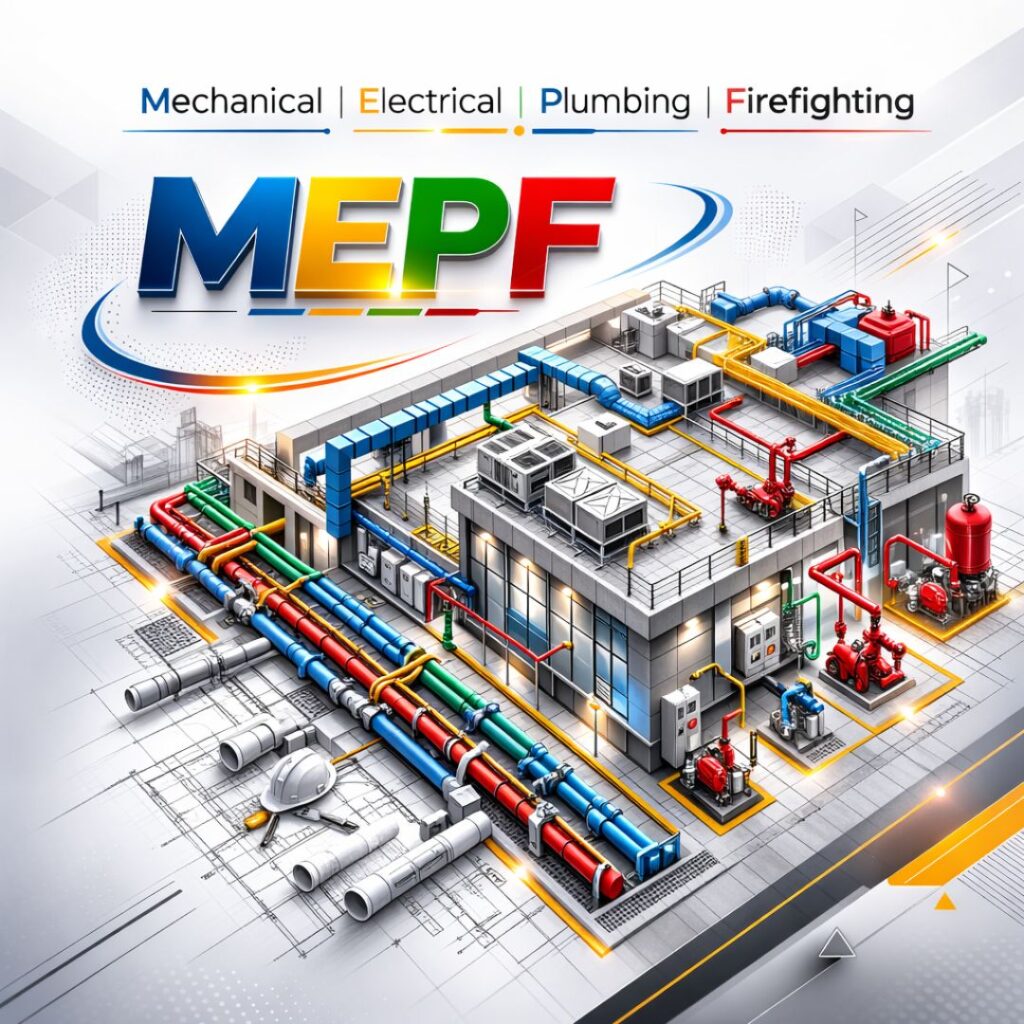
To understand MEPF Design in Construction, we must first understand the MEPF full form in construction. MEPF stands for Mechanical, Electrical, Plumbing, and Fire Fighting. These are the essential building services that make a structure functional, safe, and comfortable.
When people ask what is MEPF in construction, the simple answer is this: it is the engineering design and integration of all mechanical systems (HVAC), electrical systems (power and lighting), plumbing systems (water supply and drainage), and fire protection systems within a building. Without proper MEPF Design in Construction, even the most beautiful architectural design cannot operate efficiently.
In 2026, buildings are expected to be energy-efficient, compliant with safety codes, and smart-enabled. This makes MEPF Design in Construction more complex and more important than ever. The design process includes load calculations, equipment sizing, routing layouts, safety compliance, sustainability planning, and coordination with architects and structural engineers. To improve coordination and reduce design conflicts, many developers now rely on professional BIM consultancy in Ahmedabad to streamline mechanical, electrical, plumbing, and fire system integration during the planning stage.
At INFRAVISEDESIGN, we approach MEPF Design in Construction with a structured methodology that reduces clashes, controls cost, and ensures long-term reliability. Our expertise in MEPF engineering services India allows us to design systems that meet Indian codes while aligning with global standards like ASHRAE and NBC.

Difference Between MEP and MEPF in Modern Construction
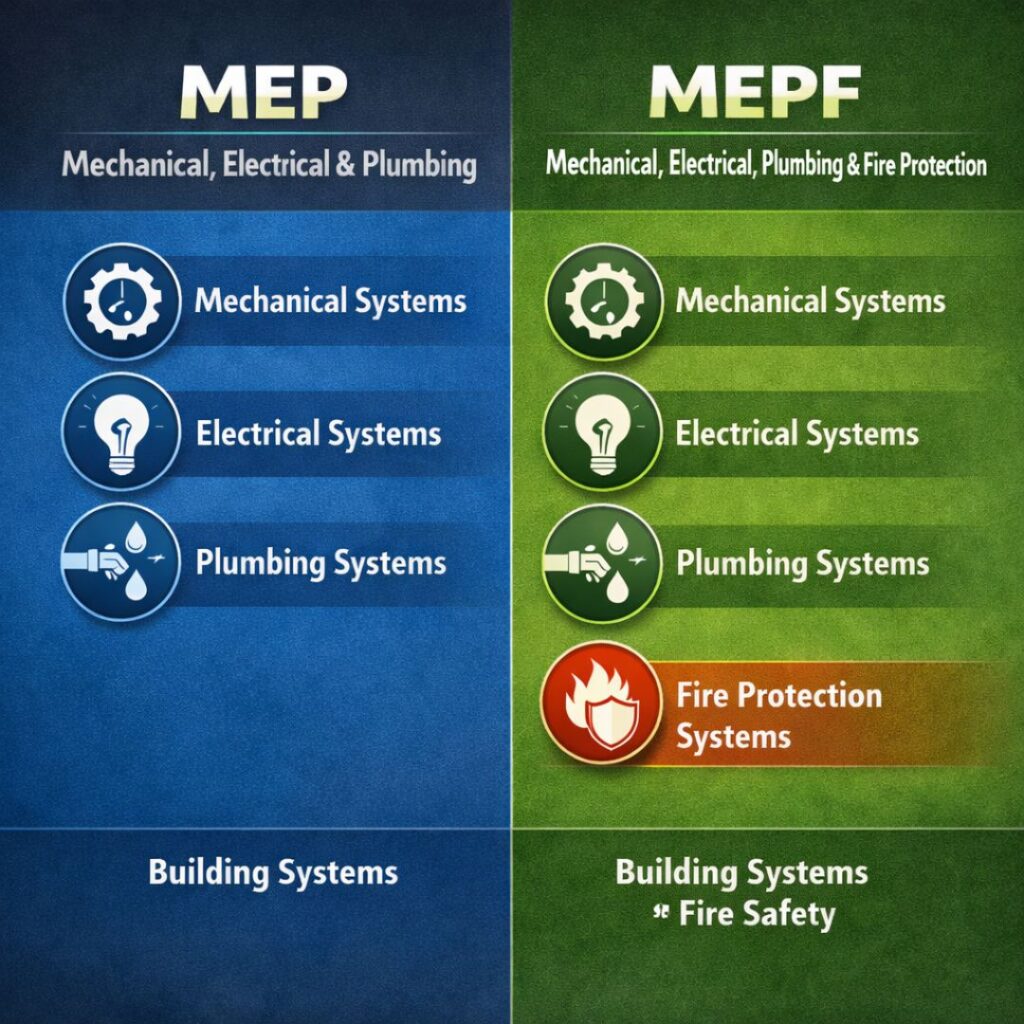
One of the most common questions is the difference between MEP and MEPF. Traditionally, construction projects used the term MEP, which included Mechanical, Electrical, and Plumbing systems. However, modern construction practices now include Fire Fighting as a dedicated and integrated system — making it MEPF.
The difference between MEP and MEPF lies primarily in fire protection integration. In earlier projects, fire systems were sometimes handled separately. Today, fire safety is mandatory and deeply integrated into the overall MEPF Design in Construction process. Fire sprinklers, hydrants, fire alarms, smoke detection systems, and suppression systems must be carefully coordinated with HVAC ducting, electrical trays, and plumbing lines. This is why many projects rely on professional HVAC design services Ahmedabad to ensure proper ventilation planning and seamless integration with fire safety and mechanical systems.
In commercial buildings and high-rise residential towers, fire compliance is strictly regulated under the National Building Code (NBC). This makes the importance of MEPF in construction projects extremely high. Ignoring fire integration can lead to penalties, delays, and serious safety risks.
At INFRAVISEDESIGN, we treat fire systems as a core discipline within our MEPF Design in Construction projects. By integrating fire protection at the design stage, we eliminate costly redesigns later. This holistic approach strengthens building safety and improves approval processes.
In short, while MEP focuses on comfort and utility, MEPF ensures safety and compliance along with comfort and utility.
MEPF Design Process Explained Step-by-Step
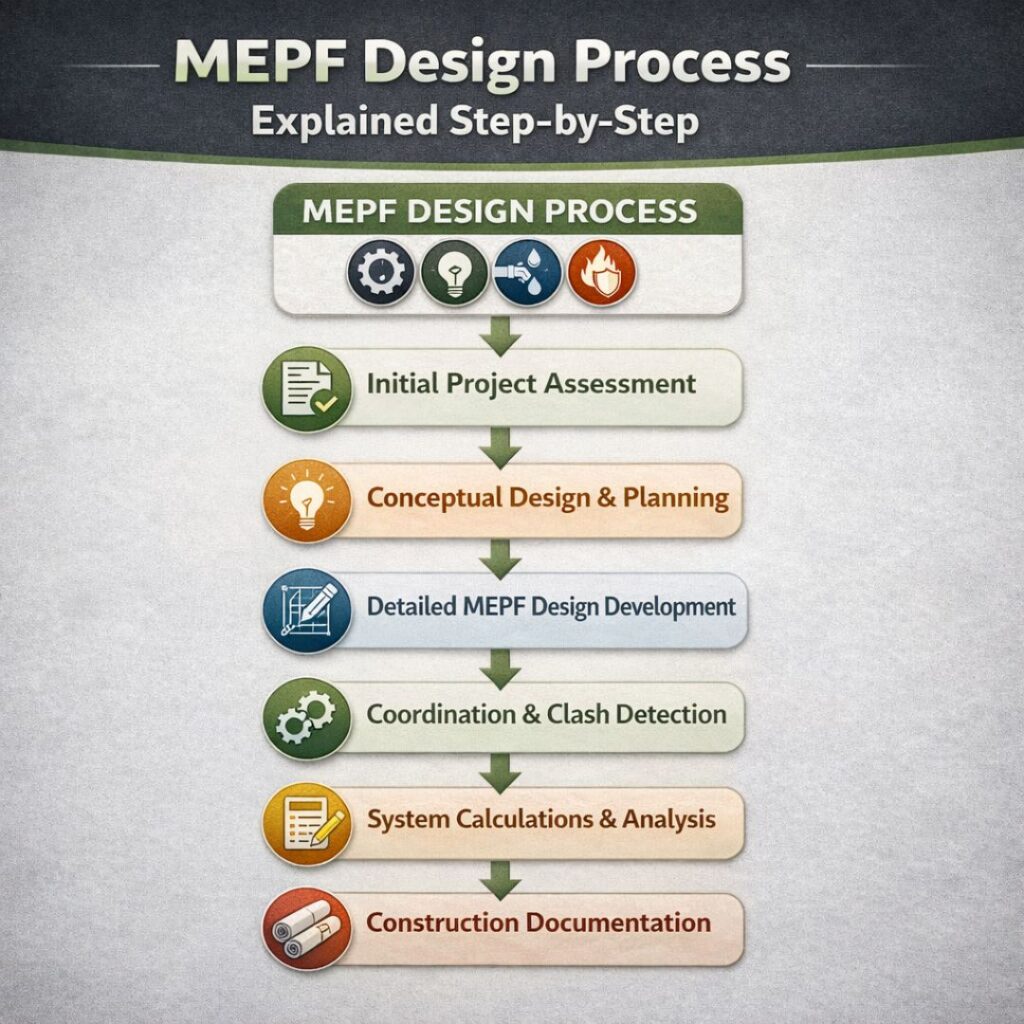
The MEPF design process explained in detail helps stakeholders understand how engineering decisions are made. Proper MEPF Design in Construction follows a systematic process to ensure accuracy, efficiency, and compliance.
The first stage is requirement analysis. Engineers evaluate the building type — whether it is a commercial complex, residential tower, hospital, or data center. Each building type demands different HVAC loads, electrical capacities, plumbing requirements, and fire protection standards. This stage defines the foundation of the entire MEPF system in commercial buildings or residential projects.
The second stage is concept design. Here, load calculations are performed for HVAC systems, electrical demand estimation is completed, water consumption is calculated, and fire protection strategies are defined. At this stage, many developers prefer consulting experienced MEP consultants in Ahmedabad to ensure that system planning aligns with technical standards, energy efficiency goals, and project requirements. Proper planning at this stage ensures the importance of MEPF in construction projects is reflected early in design decisions.
The third stage is detailed engineering. Using BIM tools, engineers create coordinated layouts, perform clash detection, and finalize equipment selection. BIM-based coordination has become essential in MEPF engineering services India because it reduces rework and improves collaboration.
The fourth stage involves site coordination and execution support. At INFRAVISEDESIGN, we supervise installations to ensure the final implementation matches the original MEPF Design in Construction drawings.
This structured approach minimizes risk, controls cost, and improves overall project efficiency.
Why It Matters in 2026: Importance of MEPF in Construction Projects
The importance of MEPF in construction projects has significantly increased in 2026 due to sustainability regulations, energy efficiency standards, and smart technology integration.
Energy efficiency is no longer optional. Government policies and green building certifications demand optimized HVAC systems and efficient electrical designs. A well-executed MEPF Design in Construction can reduce operational energy consumption by 20–40%. This directly impacts long-term cost savings.
Smart building integration is another reason why MEPF Design in Construction matters in 2026. Modern buildings use automation systems to control lighting, HVAC, and fire monitoring. These technologies require proper electrical infrastructure and mechanical integration.
The MEPF system in commercial buildings must now support data centers, high-speed communication networks, and backup power systems. Similarly, the MEPF system in residential buildings must focus on water conservation, ventilation quality, and fire safety compliance.
At INFRAVISEDESIGN, we provide sustainable and cost-efficient MEPF engineering services India that align with green building standards. Our projects demonstrate how proper MEPF planning improves asset value, tenant comfort, and operational reliability.
In 2026, ignoring MEPF is not an option — it is a strategic necessity.
Key Benefits of MEPF Design in Construction
There are several measurable advantages of investing in professional MEPF Design in Construction.
First, energy efficiency improves significantly. Proper HVAC sizing and electrical load balancing reduce energy wastage. This makes the importance of MEPF in construction projects directly linked to operational savings.
Second, safety improves through integrated fire protection systems. A coordinated MEPF system in commercial buildings ensures compliance with safety norms and reduces liability risks.
Third, coordination efficiency increases. BIM-driven MEPF engineering services India reduce clashes between ducts, pipes, and cable trays. This prevents costly on-site rework.
Fourth, long-term maintenance becomes easier. A properly designed MEPF system in residential buildings ensures accessible service areas and reduced system breakdowns.
Fifth, property value increases. Buildings with efficient MEPF Design in Construction attract tenants and investors due to lower operating costs and improved sustainability performance.
At INFRAVISEDESIGN, we have observed that early investment in detailed MEPF planning reduces lifecycle costs by a significant margin. Developers who prioritize professional MEPF consultants experience smoother approvals, faster project delivery, and better long-term returns.
Latest Trends and Insights in MEPF Design (2025–2026)

The latest developments in MEPF Design in Construction are reshaping the industry.
BIM-based coordination is now standard practice. Three-dimensional modeling allows better visualization and clash detection before construction begins. This improves the MEPF design process explained earlier.
Artificial Intelligence is also entering the field. AI-driven simulations help optimize HVAC loads and electrical distribution. This enhances efficiency in both MEPF system in commercial buildings and residential projects.
Sustainable HVAC systems like VRF and high-efficiency chillers are becoming popular in MEPF engineering services India. Solar-ready electrical systems and rainwater harvesting integration are also trending.
Smart fire detection systems integrated with Building Management Systems (BMS) are another key trend. This strengthens the safety component within MEPF Design in Construction.
Prefabricated MEP modules are reducing on-site labor and improving quality control. These innovations demonstrate how the importance of MEPF in construction projects continues to grow.
At INFRAVISEDESIGN, we integrate BIM modeling, sustainability strategies, and compliance planning into every project to stay ahead of 2026 industry standards.
Challenges in MEPF Design in Construction
Despite its benefits, MEPF Design in Construction comes with challenges.
One major challenge is poor coordination between architects and engineers. Without proper planning, ducts and structural beams can clash, leading to delays.
Budget constraints are another issue. Some developers underestimate the importance of MEPF in construction projects, resulting in compromised system quality.
Regulatory compliance is increasingly strict. The MEPF system in commercial buildings must meet fire, electrical, and environmental codes.
There is also a shortage of skilled professionals in advanced MEPF engineering services India, particularly in BIM modeling and energy simulation.
The role of MEPF consultant in construction is crucial in overcoming these challenges. An experienced consultant ensures optimized design, code compliance, and smooth coordination.
At INFRAVISEDESIGN, our multidisciplinary team mitigates risks through structured design reviews and advanced modeling tools. This ensures every MEPF Design in Construction project meets quality and safety standards.
Role of MEPF Consultant in Construction Projects
The role of MEPF consultant in construction extends beyond design drawings. Consultants analyze load requirements, select appropriate equipment, ensure regulatory compliance, and coordinate installation.
A qualified consultant understands the difference between MEP and MEPF and integrates fire systems seamlessly. They ensure the MEPF system in residential buildings and commercial projects operates efficiently for decades.
At INFRAVISEDESIGN, our consultants provide complete MEPF engineering services India, including design, coordination, supervision, and performance optimization. Our expertise strengthens trust, authority, and long-term project success.
Conclusion
In summary, MEPF Design in Construction is the backbone of modern buildings. From understanding what is MEPF in construction to mastering the MEPF design process explained, every stakeholder must prioritize professional planning.
The importance of MEPF in construction projects continues to grow in 2026 due to sustainability, smart integration, and regulatory compliance. Whether it is a MEPF system in commercial buildings or a MEPF system in residential buildings, proper engineering ensures safety, comfort, and efficiency.
If you are planning a project and need reliable, cost-efficient, and sustainable MEPF engineering services India, connect with INFRAVISEDESIGN today.
F.A.Q.
Supporting Subheading
MEPF consists of four core building service systems: Mechanical, Electrical, Plumbing, and Fire Protection. Mechanical includes HVAC systems such as air conditioning, ventilation, and exhaust. Electrical covers power distribution, lighting, panels, backup systems, and earthing. Plumbing includes water supply, drainage, sewage, and stormwater systems. Fire Protection involves fire alarms, sprinklers, hydrants, and suppression systems. Together, these components ensure safety, comfort, operational efficiency, and regulatory compliance in residential, commercial, and industrial buildings.
The seven key steps in the MEPF design process typically include requirement analysis, load calculations, system selection, schematic design, detailed design development, BIM coordination and clash detection, and final documentation with approvals. Each stage ensures proper sizing, layout coordination, and compliance with local regulations. This structured process minimizes design errors, prevents on-site conflicts, and improves execution efficiency. Following a systematic design approach is critical for delivering cost-effective and technically sound building services.
Maintaining MEPF systems requires regular inspection, preventive maintenance, and performance monitoring. HVAC systems should undergo periodic filter cleaning, duct inspection, and refrigerant checks. Electrical systems require panel inspection, thermal scanning, and load balancing. Plumbing systems need leak detection and drainage cleaning, while fire systems must be tested for alarms, pumps, and sprinklers. A preventive maintenance schedule reduces breakdown risks, improves energy efficiency, and extends equipment lifespan. Proper documentation and facility management practices are essential for long-term building performance.
MEP primarily includes three main disciplines: Mechanical, Electrical, and Plumbing. When Fire Protection is added, it becomes MEPF. Within these categories, there are multiple sub-systems such as HVAC, lighting design, power systems, water supply, drainage, fire alarms, and sprinkler systems. Large-scale projects like hospitals or data centers may also include specialized systems such as medical gas piping or advanced backup power systems. Each type plays a critical role in building functionality and safety.
Civil engineers can understand basic MEP coordination, but specialized MEP design typically requires trained mechanical and electrical engineers. MEP systems involve load calculations, equipment sizing, energy efficiency analysis, and regulatory compliance, which demand technical expertise. In smaller projects, civil engineers may manage coordination, but for commercial buildings, hospitals, or data centers, professional MEP consultants are recommended. Proper specialization ensures accuracy, safety compliance, and long-term operational efficiency of building systems.
MEP in AutoCAD refers to the use of AutoCAD software for designing mechanical, electrical, and plumbing systems in 2D format. Designers create detailed layouts for ducts, cable trays, piping, and equipment placement. While traditional AutoCAD focuses on drafting, advanced tools like AutoCAD MEP provide specialized features for system design. However, many modern consultants now prefer BIM-based software for 3D coordination and clash detection. AutoCAD remains widely used for detailed construction drawings and documentation.